Building Regulations for Roof Work in Swindon: Re-Roofing, the 50% and 25% Rules, Insulation Upgrades and Who Signs It Off
If you're about to book roof work in Swindon, one question tends to come up late, usually when the quote lands: does this need building regulations? For a few slipped tiles, no. For a full re-roof, almost always yes, and it can add a few hundred pounds to the bill. Swindon Borough Council currently charges £288 including VAT for a replacement roof covering, and the insulation upgrade that often comes with it adds another £400-£900 on a typical semi. The rules about building regulations for roof work turn on two numbers that get muddled all the time: 50% of the roof and 25% of the whole building envelope. They also matter more here than on the coast. Swindon gets 700-750mm of rain a year and around 45-55 air frosts, so a poorly insulated loft costs you more over a long Wiltshire winter. This guide covers which jobs need approval, what gets checked, who signs it off and what it all costs.
Which Roof Jobs Need Building Regulations in Swindon?
The short version is that repairs don't and replacements do. The line between the two is about how much of the roof is being stripped back and re-covered, not what the job is called on the invoice.

If you're not sure which side of the line your roof is on, Roof Repairs Swindon can take a look and tell you whether it's a repair job or a re-roof before any paperwork is involved. A lot of people who expect to need a whole new roof turn out to need a £300-£800 repair that no inspector will ever look at.
Jobs that usually don't need approval
- Replacing slipped, cracked or missing tiles, even a few dozen of them
- Re-bedding or replacing ridge tiles, or fitting a dry ridge system
- Repairing or replacing lead flashing around a chimney
- Patching a flat roof, as long as most of the covering stays put
- Fascias, soffits and gutters, which aren't part of the roof covering at all
Jobs that usually do
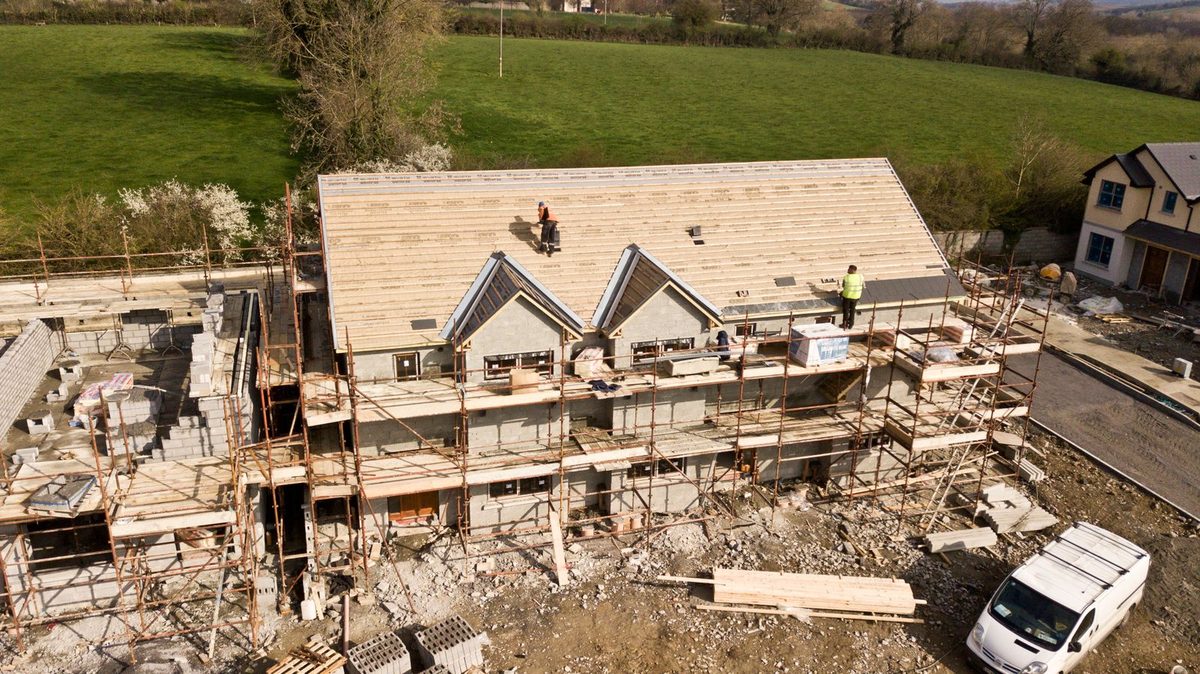
- A full re-roof, or stripping and re-covering more than half of the roof
- Replacing most of a flat roof over a heated room
- Switching to a much heavier or lighter covering, such as slate to concrete tiles
- Structural work, like taking out a chimney stack or cutting rafters for a dormer
Swindon Borough Council's own page on checking if you need building regulations approval lists "replacing a roof" and "re-tiling a roof" as examples of work that needs it.
Planning permission is a separate question
Building regulations are about how the work is done: structure, insulation, fire safety. Planning permission is about how the house looks and what it's used for. They're separate systems. Passing one doesn't cover the other.
Re-roofing that doesn't really change how the house looks normally doesn't need planning permission. Like-for-like tiles on a 1980s semi in Freshbrook won't involve the planning department at all. Rooflights that stick out more than 150mm from the slope need planning permission. A dormer, or a switch to a covering that looks very different, may need it too, depending on the house.
Conservation areas and listed buildings are the exception. Old Town and the Railway Village have tighter controls, and conservation areas can have Article 4 directions that remove the usual permitted development rights. A listed cottage needs listed building consent for almost any change to its materials, on top of building regulations.
The 25% and 50% Rules: Building Regulations Thresholds for Roof Work
Most of the confusion starts here. People talk about "the 25% rule" as if it means a quarter of the roof. It doesn't. There are two separate tests, and the work counts as a renovation that needs approval if it passes either one.

- The 50% test: you're re-covering more than half of the roof itself.
- The 25% test: the work affects more than a quarter of the whole "building envelope", meaning the walls, floor, roof, windows and doors added together. The regulations call this a major renovation.
The Planning Portal's guidance on work to an existing roof puts it simply: you won't normally need an application if less than 25% of the envelope and less than 50% of the roof is affected. Go over either and you will.
On a house, the roof is only one part of the envelope, so the 50% test is usually the one that catches a re-roof first. On a typical three-bed semi, one full slope is roughly half the roof. Re-covering the back slope only puts you right on the line, and that's worth checking with building control rather than guessing.
What has to be upgraded
Once you're over a threshold, Approved Document L says the whole roof should be brought up to a U-value of 0.16 W/m²K, as long as that's technically, functionally and economically feasible. A U-value measures how much heat escapes, and lower is better. For an ordinary cold loft, the government's own example of how to hit 0.16 is 250mm of mineral wool or cellulose laid between and across the ceiling joists. Most roofers fit 270-300mm to be safe.
Insulation Upgrades on Swindon Houses: From the Railway Village to Tadpole
How much this upgrade costs depends almost entirely on when your house was built. Swindon has three very different types of housing stock, and they come out very differently.
Railway Village and the Victorian terraces
The terraces built for the Great Western Railway works in the 1840s-60s were put up with no loft insulation at all, and many of the cottages are listed. Approved Document L recognises that historic and traditionally built homes may need a lighter touch, because heavy insulation can trap moisture in old lime and timber or harm the building's character. Expect building control to want a sensible improvement, not 300mm of wool crammed into a shallow loft. Ventilation matters just as much here, because 150-year-old timbers don't like condensation.
West Swindon and the 1960s-80s estates
Toothill, Freshbrook, Westlea, Shaw and the other West Swindon estates are where the upgrade most often bites. When they were built, 25-100mm of loft insulation was normal, and plenty still have exactly that. If yours has had a top-up to 270mm under a council or energy company scheme, you may have very little to do. If not, topping up a 45-50m² loft costs roughly £400-£900 when the roofer does it during the re-roof, while the scaffold and access are already there.
We've walked through what happens on each day of a Swindon re-roof, including when the loft insulation goes back in, if you want to see where the upgrade fits into the job.
The newer northern estates
Abbey Meads, Redhouse, Taw Hill, Oakhurst and Tadpole Garden Village were mostly built from the late 1990s onwards. The newest of them often already have 250-270mm in the loft, so the upgrade becomes a check rather than a cost. These roofs are also mostly too young to need replacing, so for most northern Swindon owners this is a question for 2040, not now.
Heavier Tiles, Flat Roofs and Garages: Jobs With Extra Rules
Changing to a heavier covering
Part A of the regulations is about structure. If the new covering is 15% or more heavier than the old one, the Planning Portal says you need approval, and the roof timbers may need checking or strengthening. Natural slate weighs roughly 25-35kg per square metre, concrete interlocking tiles 45-55kg and plain clay tiles 65-80kg. So swapping slate for concrete tiles on a Victorian roof can nearly double the weight sitting on 150-year-old rafters. A structural engineer's report usually costs £300-£600, and strengthening, if it's needed, adds £1,000-£3,000 or more.
Flat roofs
Replacing the waterproof layer on a flat roof counts as renovating it. Replace more than half of it on a heated room, like a kitchen extension or a dormer, and the same 0.16 target applies. That usually means a warm deck, with 100-150mm of rigid insulation laid on top of the deck before the new membrane goes on. Expect it to add £25-£45 per square metre to a flat roof replacement. Where there isn't enough height at the edges, for example under a door threshold onto the flat roof, Approved Document L allows a lesser standard.
Garages and outbuildings
An unheated detached garage isn't a "thermal element", so re-covering its roof doesn't trigger the insulation rules. Asbestos cement roofs are a separate matter with their own disposal rules, whatever the building regs say.
Who Signs It Off: Competent Person Schemes vs Swindon Building Control
There are three ways to get the work signed off, and the right one depends on who you hire.

A roofer registered with a competent person scheme
The government's list of authorised competent person schemes names two for replacing roof coverings on pitched and flat roofs: NFRC's CompetentRoofer scheme and NAPIT. A registered roofer can self-certify the job. The scheme tells the council for you, and you get a Building Regulations Compliance Certificate in the post. NFRC's scheme also includes a 10-year insurance-backed guarantee on domestic jobs. There's no separate council fee, and the scheme's charge is usually built into the quote rather than listed on its own.
A building notice to Swindon Borough Council
If your roofer isn't registered, you or they apply to Swindon Borough Council's building control team. From April 2026, the council charges £288 including VAT for a replacement roof covering, or the same again for renovating a thermal element such as a flat roof. A building notice has to go in at least two days before work starts. An inspector visits during the job, usually once the old covering is off and before the new insulation is hidden, and issues a completion certificate at the end.
A private building control approver
Private firms, once called approved inspectors and now registered building control approvers, can also sign off roof work. Their fees vary, but for a single re-roof they tend to sit in a similar range to the council's, so get a quote and compare.
What Happens If Building Regulations Are Skipped?
Plenty of Swindon roofs have been replaced without anyone telling building control. Nothing happens straight away. The trouble usually starts years later, when you try to sell.

When you sell
A buyer's solicitor will ask whether the roof has been replaced, and if so, for the certificate. Without one, the sale can stall for weeks. The usual workaround is a "lack of building regulations" indemnity policy, which often costs £50-£250. It only covers the risk of the council taking enforcement action, though, not the cost of fixing a badly done roof. Most policies also become void if anyone contacts the council about the work, so once building control has been asked, the indemnity route usually closes.
Regularisation
You can apply for retrospective approval, called regularisation. Swindon Borough Council currently charges £360 for a replacement roof covering, and the inspector may ask for parts of the roof or loft to be opened up so they can see the insulation and fixings. That costs more than doing it properly at the start.
Enforcement
In the worst case the council can require the work to be put right at your cost. It's rare for a straightforward re-roof. It's more of a risk where heavier tiles have gone on without anyone checking the timbers.
What to Ask Your Swindon Roofer Before Work Starts
Swindon's roofers are busy from October to March, when storms and frost damage keep them on repairs. Lead times of 4-8 weeks are common in winter, so the paperwork is worth sorting while you wait. Insulation and membrane work go best in the drier months from April to September, when fewer days are lost to rain.

Ask these before you sign:
- "Does this job need building regulations?" A good roofer answers straight away and tells you why.
- "Are you registered with a competent person scheme?" If yes, ask which one and check the register yourself.
- "If not, who's notifying building control, and is the £288 fee in your price?"
- "How much loft insulation is going in?" Get the depth in writing, say 270mm, and check it's in the quote.
- "Will the new tiles weigh more than the old ones?" This one matters on any slate roof.
- "What paperwork do I get at the end?" A certificate, plus a written workmanship guarantee.
Then put the certificate in the drawer with your house deeds. A buyer's solicitor will ask for it one day.
Frequently Asked Questions About Building Regulations for Roof Work in Swindon
Do I need building regulations to replace roof tiles in Swindon?
Not for repairs. Replacing slipped or broken tiles, ridge tiles or flashing doesn't need approval. You need it if more than half the roof is being re-covered, if the work affects more than a quarter of the whole building envelope, or if the new covering is 15% or more heavier than the old one.
How much does building control cost for a re-roof in Swindon?
Swindon Borough Council charges £288 including VAT for a replacement roof covering, based on its April 2026 charges. If your roofer is registered with a competent person scheme such as CompetentRoofer, there's no council fee, as the roofer self-certifies and the scheme notifies the council.
Does a new roof have to meet current insulation standards?
Usually, yes. Once the work passes the 50% or 25% thresholds, the roof should reach a U-value of 0.16 W/m²K where that's technically and economically feasible. In a typical loft that means at least 250mm of mineral wool, and most roofers fit 270-300mm.
What if my roof was replaced without building regulations approval?
You can apply to Swindon Borough Council for regularisation, which currently costs £360 for a roof covering. Alternatively, when selling, a lack of building regulations indemnity policy is often accepted, but it won't pay for defects and is usually void once the council has been contacted.
Ready to work with Roof Repairs Swindon?
Let's connect! We’re here to help.
Send us a message and we’ll be in touch.
Or give us a call today at 01793 939231
Agency Contact Form
More Marketing Tips, Tricks & Tools