Re-Roofing Your Swindon Home: What Happens Day by Day, How to Prepare and What to Check at the End (2026)
Re-roofing a house in Swindon is a big job, but it's a surprisingly short one. A typical three-bed semi on one of the town's 1960s-80s estates takes 5-8 working days from the scaffold going up to the last ridge tile, and most families stay at home the whole time. Across Swindon, a huge number of those estate roofs were covered in concrete interlocking tiles over bitumen felt between 1965 and 1985, which puts them at 40-60 years old now. That's right at the end of the felt's life, even when the tiles still look fine. Swindon also sits inland, so it gets more frost than the coast, around 45-55 air frosts a year against a UK lowland average nearer 40, and its 700-750mm of annual rain is spread across plenty of grey, damp days. So this post isn't about price. It walks through what actually happens on each day of a re-roof, what you need to do before the roofers arrive, and what to check before you pay the final invoice.
Before Day One: The Two Weeks Leading Up to Your Re-Roof
Most of the stress of a re-roof comes from not knowing what to expect, so a good roofer will go through the plan with you at least a week before. You should know the start date, roughly how many days it will take, where the skip or tipper will go, and who to call if something worries you while they're working.

If you're still at the stage of deciding whether you need a whole new roof or just repairs, Roof Repairs Swindon can survey it and give you a straight answer. Plenty of people expect a re-roof and end up only needing the ridge and some felt at the eaves.
Clear the loft
This is the one job that falls on you. When the old tiles and felt come off, 40 years of dust, grit and broken felt fall straight into the loft. Anything stored up there will get filthy, and some of it may get wet if a shower arrives mid-strip. Move what you can, and cover what you can't with dust sheets or plastic. Boxes left under the eaves are the worst hit.
Talk to your neighbours
On a semi or terrace, the scaffold will usually need to sit close to the boundary, and the roofers may need to work on the line where your roof meets next door's. A friendly chat a week before saves a lot of tension. If work touches the party wall itself, such as re-bedding a shared ridge or cutting into a shared parapet, the gov.uk guidance on party walls and building work explains when a formal notice is needed.
Bats and nesting birds
If your house backs onto open land, as many in Wroughton, Haydon Wick and the western edge of town do, there's a chance of bats in the roof. They're protected by law, and work has to stop if they're found. If you've seen droppings in the loft or bats leaving at dusk, tell your roofer before the start date so a survey can be arranged. The government guidance on bat surveys and licences explains what's involved.
Day 1: Scaffold Up and Strip Begins
The scaffold usually arrives the day before or first thing on day one. On a standard semi, erecting it takes 3-5 hours. You'll hear a lot of clanking and you might lose the use of your drive.
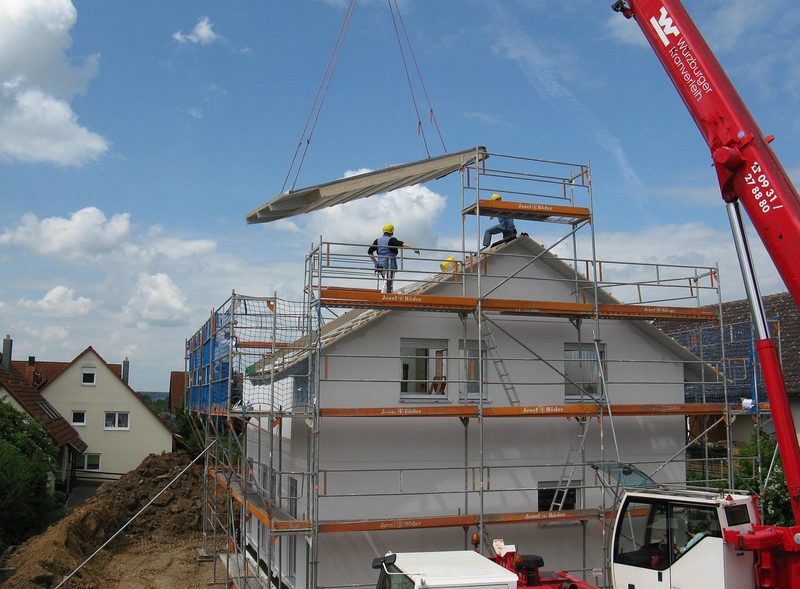
Once it's up and has been checked, the roofers start stripping. They usually work one slope at a time rather than opening the whole roof, so if the weather turns only a part of the house is exposed. Old concrete tiles go down a chute or are lowered in bags into the skip. Some contractors salvage good tiles for patching other jobs, which can knock a little off your bill. It's worth asking.
Expect noise. Tiles being prised off and dropped into a chute are loud, and it starts around 8am. If you work from home, day one and day two are the ones to take elsewhere.
Days 2-3: What They Find Under the Tiles
This is when the roof shows its true condition. With the tiles and battens off, the roofer can see every rafter, the wall plates along the top of the walls and the timber at the eaves.
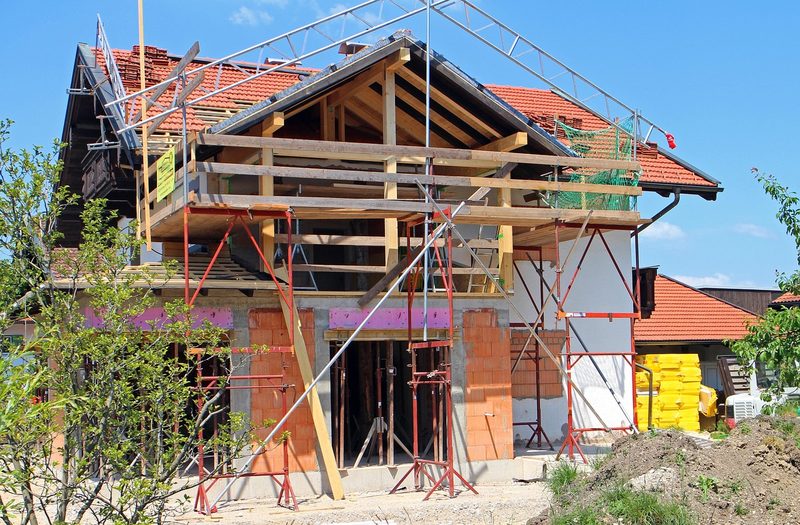
On most Swindon estate houses the timbers are in decent shape, because the trussed rafter roofs of that era were well made and the felt mostly kept them dry. The common finds are rotten fascia boards and the ends of rafters at the eaves, where the old felt sagged into the gutter and let water sit on the timber for decades. On older houses in the Railway Village area and the Victorian streets around Old Town, it's more likely to be a softened purlin, a rotten wall plate or a strut someone removed years ago.
A good roofer will show you anything unexpected, ideally with photos, and price it before doing it. Our post on roof felt replacement on Swindon's 1960s-80s estate roofs goes into more detail on why the eaves fail first and what the repairs involve.
Every slope is covered with breathable membrane the same day it's stripped. If rain is forecast, a properly fitted membrane keeps the house dry for a few days, and any decent firm will also have tarpaulins ready.
Days 3-6: Battens, Tiles and the Weather Question
Membrane and battens
New breathable membrane goes on first, lapped and sealed, then new treated battens nailed at the right spacing for the tile. This is the bit that decides how long your new roof lasts, so it's the bit that shouldn't be rushed.

Tiling
Tiles go on from the eaves upwards, nailed and clipped to current wind-loading standards. On most Swindon houses that means every tile is mechanically fixed, not just every other course like the original. That's a big part of why a new roof copes so much better with the 60-70mph gusts that cross the M4 corridor a few times each winter.
When it rains
Swindon has around 150 days a year with measurable rain, so most re-roofs lose a day or two to the weather. Light drizzle doesn't usually stop work on membrane or battens. Heavy rain or high wind does, partly for safety and partly because mortar and some sealants won't cure properly. A roof that's been stripped and membraned is safe to leave over a wet weekend.
Days 6-8: Ridge, Verges, Lead and Gutters
The details go on last. Most re-roofs now use dry ridge and dry verge systems that are mechanically fixed instead of bedded in mortar, which means no pointing to crack in a cold Swindon January. Lead around chimneys and at abutments is replaced or re-dressed. New fascias, soffits and gutters often go on now too, while the scaffold is still up, because doing them later means paying for scaffold twice.

Under Approved Document L of the Building Regulations, re-covering more than half of the roof counts as a renovation that may need the loft insulation brought up to current standards. A full re-roof always clears that bar. In practice that usually means topping it up to 270-300mm of mineral wool. Your roofer should either be registered with a competent person scheme and self-certify the work, or notify Swindon Borough Council's building control for you.
Typical Timeline and Costs for a Swindon Re-Roof in 2026
Typical time on site and cost including VAT:

- 2-bed terrace, concrete tiles: 4-6 days, £6,500-£9,000
- 3-bed semi, concrete tiles: 5-8 days, £8,500-£12,500
- 4-bed detached, concrete tiles: 7-10 days, £12,000-£17,000
- 3-bed semi, natural slate: 7-10 days, £13,000-£18,000
- Bungalow, concrete tiles: 5-7 days, £9,000-£14,000
Those prices include scaffold, skip, membrane, battens, tiles, dry ridge and verge, and building control sign-off. Timber repairs, new fascias and gutters, chimney work and insulation top-ups are extra.
Supply of roofers in Swindon is tight from October to March. The town grew quickly over the last 30 years and the number of experienced roofers hasn't kept up, so lead times of 4-8 weeks are common in winter. Booking for April or May can sometimes get you a better slot and a slightly lower price.
The Handover: What to Check Before You Pay
Before the scaffold comes down, ask the roofer to walk you round. From the scaffold if you're comfortable, or from the garden if not. Check that:

- Tiles sit in straight lines with even gaps, with no cracked or chipped ones
- Dry ridge and verge caps are all clipped and none are missing
- Lead flashing is chased into the brickwork and pointed, not stuck on with mastic
- Gutters are clear of debris, fall towards the downpipes and don't drip at the joints
- Loft insulation has been relaid and topped up where agreed, and the loft has been swept
- Roof vents or vent tiles are fitted, so the loft doesn't fill with condensation
Then ask for the paperwork. You should get the building control completion certificate or competent person certificate, the manufacturer's product guarantee and the roofer's written workmanship guarantee. Keep them with your house deeds. A buyer's solicitor will ask for them when you sell. TrustMark-registered firms and members of the National Federation of Roofing Contractors also give you a route to resolve any problems if something goes wrong after the scaffold has gone.
Frequently Asked Questions About Re-Roofing in Swindon
How long does it take to re-roof a house in Swindon?
Most three-bed semis take 5-8 working days on site, including scaffold, strip, membrane, tiling and finishing details. Terraces are quicker, detached houses and slate roofs take longer, and winter weather can add a day or two.

Can I stay in my house while the roof is replaced?
Yes. Almost everyone does. The roof is opened one slope at a time and covered with membrane the same day, so the house stays dry. Expect noise from 8am, dust in the loft, and limited use of the drive while the scaffold and skip are there.
Does a re-roof need building regulations approval in Swindon?
Yes. Building regulations apply once more than half of the roof covering is replaced, and a full re-roof always passes that point. Your roofer can self-certify through a competent person scheme or notify Swindon Borough Council's building control. You should get a completion certificate at the end.
What happens if it rains during a re-roof?
Stripped sections are covered in breathable membrane straight away, which keeps water out for several days. Roofers stop in heavy rain or high wind and carry on once it clears. Most Swindon re-roofs lose a day or two to the weather.
Ready to work with Roof Repairs Swindon?
Let's connect! We’re here to help.
Send us a message and we’ll be in touch.
Or give us a call today at 01793 939231
Agency Contact Form
More Marketing Tips, Tricks & Tools