Roof Repairs in Marlborough: Period Roofs, Common Problems, and Costs
Marlborough's High Street is one of the widest in England, and most of the buildings along it went up in a rush of brick and tile after fire tore through the old timber-and-thatch town in 1653. That history is still sitting above your head. The Georgian frontages hide steep clay-tiled roofs, hidden lead valleys, and parapet gutters that are now 200-plus years old in places, and they fail in ways a modern estate roof never will. Roof repairs in Marlborough run £150-£900 for most faults, but period detailing adds 20-30% to like-for-like work, and a full re-roof on an older town-centre property lands at £7,000-£15,000. With Wiltshire seeing 110-120 wet days a year and the downs funnelling wind straight up the Kennet valley, this guide covers what goes wrong here, what each fix costs, and who to trust with an old roof.
The Roof Repairs Marlborough Homes Need Most Often
The faults split neatly by age. On the period stock in the centre, the big three are slipped handmade clay tiles, failed lead in valleys and parapet gutters, and eroded lime mortar at ridges and verges. Together they account for the majority of call-outs in the town centre, and each starts small - a £150-£300 fix - before turning into a stained ceiling.
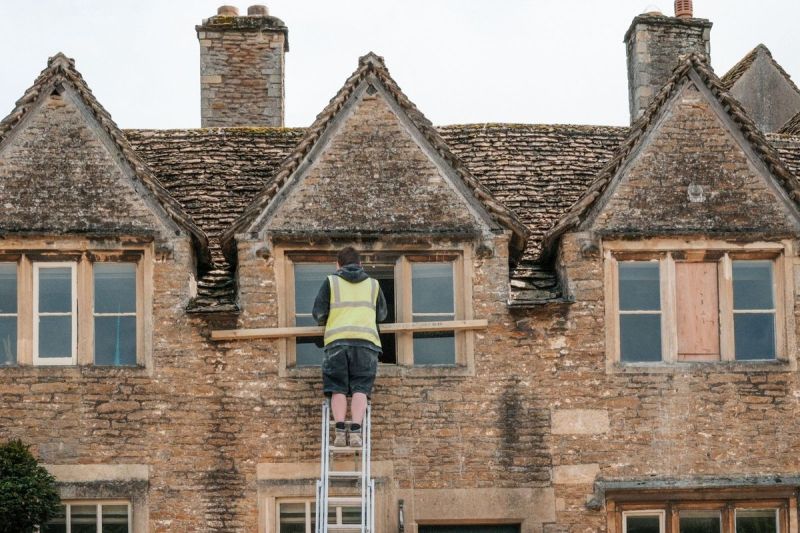
Slipped tiles on older roofs are usually nail sickness: the iron nails holding the tiles have rusted through after a century or more, so tiles let go in ones and twos with every gale. Refixing a patch costs £150-£350, but once several slip in a season the fixings are failing wholesale, not individually. On the newer housing off Salisbury Road and toward the edges of town, the common fault is the same as everywhere else in Wiltshire - cracked mortar under ridge and verge tiles, £600-£1,500 to strip and re-bed a full ridge. If you are not sure which category your roof falls into, the team at Roof Repairs Swindon survey period and modern roofs across Marlborough and the villages around it.
The third regular is blocked parapet gutters. Leaves off the mature trees around the town wash into concealed gutters behind the High Street parapets, water backs up over the lead, and the first sign is a damp patch two rooms away from the actual problem. Clearing and checking a parapet gutter runs £150-£350 and is the cheapest insurance an old building can buy.
What Roof Repairs Cost in Marlborough
Prices here carry a period premium, and it is worth understanding why before a quote lands. Handmade or reclaimed clay tiles cost £1.20-£2.50 each against 60p-£1 for modern concrete, lime mortar work is slower than cement, and three-storey High Street buildings need serious access. Expect like-for-like period work to come in 20-30% above the same job on an estate house.
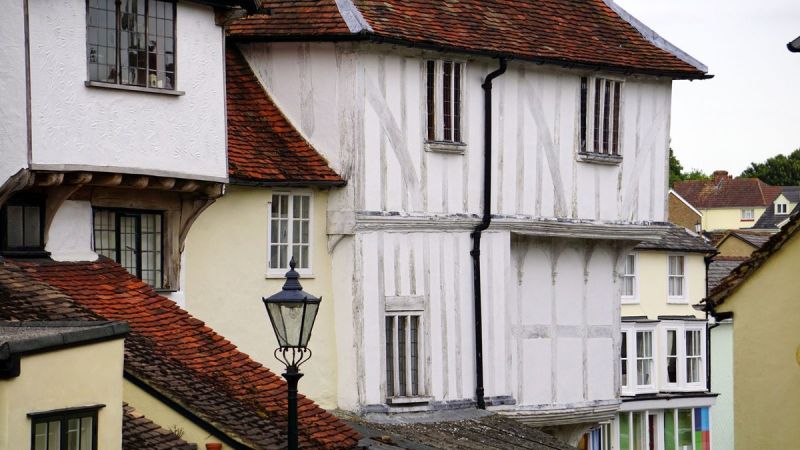
Typical 2026 figures for the town: replacing a few slipped tiles carries a £150-£250 minimum call-out, re-bedding ridge tiles runs £45-£75 per linear metre, lead work in a valley or parapet gutter is £250-£700 per section, and chimney re-flashing £300-£700. Re-pointing a stack in lime costs £400-£1,000, a fair step above the cement equivalent because the mortar cures slowly and the pointing is done by hand. Moss clearing on shaded slopes runs £250-£700.
Access is the line that surprises people. Scaffolding a two-storey house costs £600-£1,200, but a three-storey High Street property with a pavement licence from Wiltshire Council can reach £1,000-£1,800. A survey at £150-£350 before winter is money well spent on any roof over 80 years old.
Period Roofs Behind the Georgian Frontages
A Georgian town house roof is a different machine from a modern one, and treating it like a modern one is how expensive damage starts. The coverings are handmade clay tiles or slate on timber that has moved and settled over two centuries, and the weatherproofing depends on details you cannot see from the street.

Handmade clay tile and nail sickness
Handmade clay tiles last 60-100 years or more, often outliving their fixings twice over. The failure mode is nail sickness - rusted fixings letting sound tiles slide - and the honest answer once it takes hold is stripping and re-hanging the slope, reusing every good tile, at £3,500-£7,000 per slope rather than chasing individual slips at £200 a visit. A roofer who quotes patch after patch on a nail-sick roof is selling you the same repair on a loop.
Parapets, valleys, and hidden lead
The lead is where period roofs actually leak. Valleys, parapet gutters, and flashings were designed for hand maintenance, and lead has a working life of 60-100 years depending on thickness. Renewing a lead valley costs £800-£2,000, and the golden rule is bay sizes - lead laid in overlong runs splits as it expands, so a cheap repair that solders over a split without fixing the bay length fails within 2-3 years.
Thatch, Listed Buildings, and the Rules
Marlborough is one of the few English towns where you can date the roofscape to specific fires. After the third major blaze, Parliament banned thatch in the town centre in 1690, which is why the High Street is tile and the surviving thatch sits on the fringes of town and in the villages around it. Both types come with rules attached.

The remaining thatch
Thatch is a specialist trade, not a roofing job. A master thatcher re-ridges at £1,500-£3,500, patches at £500-£1,500, and a full re-thatch runs £15,000-£30,000+ depending on material - combed wheat reed lasts 25-40 years, water reed up to 50, but ridges need renewing every 10-15 regardless. We covered the local thatch and stone-cottage repair picture in more detail in our guide to roof repairs in Purton and Cricklade, and the same logic applies on Marlborough's edges.
Listed buildings and consent
Much of the High Street is listed, and listed building consent is required before changing roof materials, altering a chimney, or adding rooflights - carrying out works without it is a criminal offence, not a paperwork slip. The Planning Portal's guidance on permissions for roof works explains when consent is needed, and applications go through Wiltshire Council. Like-for-like repairs generally do not need consent, which is one more argument for repairing properly rather than replacing with something different.
Downland Exposure: Why the Weather Gets a Say
Marlborough sits in the Kennet valley with the downs rising on both sides, and that shape matters. The valley funnels wind along the line of the A4, so gable ends facing east and west take driving rain that sheltered elevations never see, and the 110-120 wet days a year keep old porous tiles damp for weeks at a stretch.
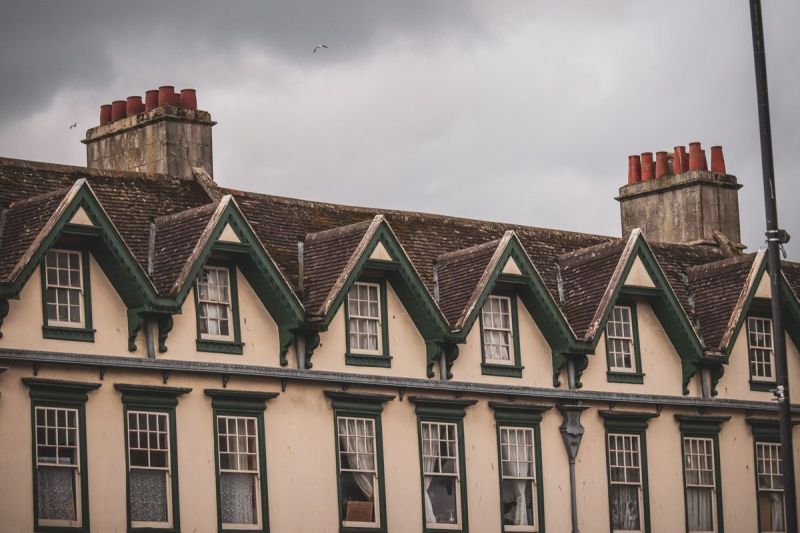
Damp is the period roof's real enemy. Saturated clay tiles are vulnerable to frost spalling - the surface blows off in freeze-thaw cycles - and lime mortar erodes measurably faster on the weather side of a roof. North-facing slopes shaded by the town's mature trees hold moss, which traps more moisture and blocks the gaps between tiles; on old roofs moss should be removed by hand, never pressure washed, because a jet wash strips the fireskin off handmade tiles and takes years off their life.
The practical upshot: an autumn gutter-and-tile check at £150-£350 catches most of what winter would otherwise turn into a £1,000-plus repair. On a 200-year-old roof, small and early beats big and late every time.
Repair or Replace on an Older Roof
The rule of thumb is simple: when repairs start costing more than 25-30% of replacement value per year, or when the fixings rather than the coverings are failing, replacement wins. On a period roof that maths is softened by one big factor - the tiles themselves usually survive.
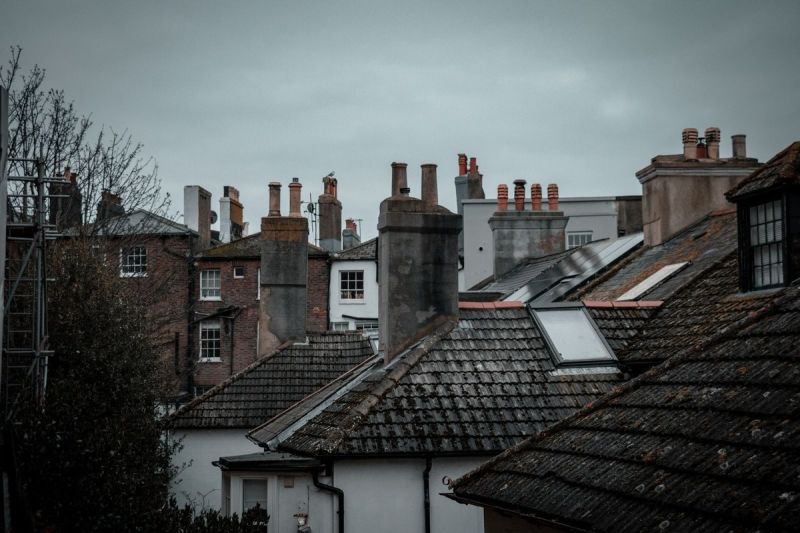
A strip and re-lay reuses 70-85% of the original handmade tiles on a typical job, with matching reclaimed tiles making up the shortfall. That keeps a re-roof on a Marlborough town house at £7,000-£15,000 rather than the £20,000-plus that all-new handmade tiles would cost, and it keeps the roof looking as it should - which on a listed building is not optional anyway. Modern breathable membrane and treated battens go on underneath, so the roof performs like a new one while looking like the old one.
Get the timing right and replacement is a once-a-century event. Get it wrong - patch a nail-sick roof for a decade - and you pay for half a re-roof in repairs and still need the re-roof.
Finding the Right Roofer in Marlborough
Period work is where roofer choice matters most, because the wrong repair actively damages an old roof. Cement mortar on a lime-built roof traps moisture and cracks tiles. Modern concrete tiles on one slope of a Georgian roof can overload timbers designed for lighter clay. Ask any candidate three things: do they work in lime, can they source reclaimed tiles to match, and have they done listed buildings before.
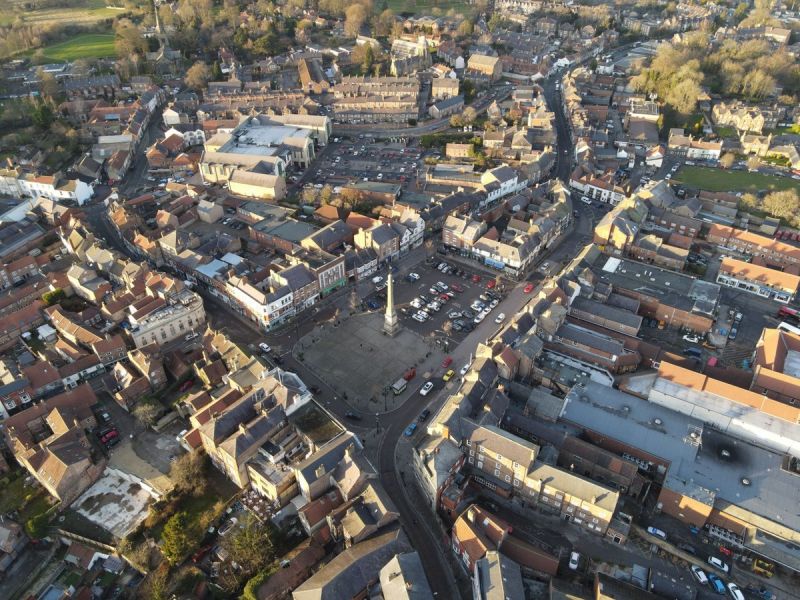
Get three itemised quotes and check credentials rather than taking a website's word for it. The National Federation of Roofing Contractors' find-a-member search lists inspected firms by postcode, and TrustMark, the government-endorsed quality scheme is a solid cross-check. Confirm £2 million-plus public liability cover, and keep deposits to 10-25% against materials with the balance staged.
One Marlborough-specific note: the town sits in a busy trades market pulled between Swindon, the M4 corridor, and the wealthy villages of the Kennet valley, so genuinely good period roofers book out 4-8 weeks ahead. A firm that can start tomorrow on a listed roof is not automatically a red flag, but it deserves a harder look at references than one with a waiting list.
---
FAQ
Q: How much do roof repairs cost in Marlborough?
A: Most repairs sit between £150 and £900 depending on the fault. Slipped tiles carry a £150-£250 minimum call-out, ridge re-bedding runs £45-£75 per linear metre, lead valley or parapet gutter work is £250-£700 per section, and lime re-pointing a chimney £400-£1,000. Period detailing adds 20-30% over the same job on a modern house, scaffolding adds £600-£1,800 depending on height, and a full re-roof on an older town property lands at £7,000-£15,000.
Q: Do I need permission to repair a roof on Marlborough High Street?
A: Like-for-like repairs generally do not need consent, but much of the High Street is listed, so changing roof materials, altering a chimney, or adding rooflights needs listed building consent from Wiltshire Council first - and doing such work without consent is a criminal offence. If your building is listed or you are not sure, check before any work that changes the roof's appearance or materials.
Q: Why do period roofs in Marlborough fail differently from modern ones?
A: The coverings usually outlast their fixings. Handmade clay tiles last 60-100 years, but the iron nails holding them rust through, so sound tiles slide off in every gale - called nail sickness. The lead in hidden valleys and parapet gutters also reaches the end of its 60-100 year life, and blocked parapet gutters behind the Georgian frontages cause damp patches far from the actual leak. Marlborough's valley position funnels wind-driven rain at gable ends, which speeds all of it up.
Q: Is there still thatch in Marlborough?
A: Very little in the centre - Parliament banned thatch in the town after the fires of the 1600s, which is why the High Street is tiled. Surviving thatch sits on the edges of town and in the surrounding villages, and it needs a master thatcher rather than a general roofer. Re-ridging costs £1,500-£3,500, patching £500-£1,500, and a full re-thatch £15,000-£30,000+ depending on material.
---
Ready to work with Roof Repairs Swindon?
Let's connect! We’re here to help.
Send us a message and we’ll be in touch.
Or give us a call today at 01793 939231
Agency Contact Form
More Marketing Tips, Tricks & Tools