Flat Roof Repair vs Replacement in Swindon: Costs and How to Decide
Flat roofs punch above their weight in the repair statistics. They make up a small fraction of the total roof area on most Swindon homes - the garage, the extension, a porch, a dormer top - yet they account for roughly 1 in 3 of the roofing call-outs in the town, largely because so many were laid in cheap felt during the 1980s and 90s extension boom and are now well past their design life. The good news is that flat roof faults are predictable: ponding, split membranes, blistering, and tired flashings cover the vast majority of leaks. Most are repairable for £150-£1,200 if caught early, and only tip into replacement territory once water has reached the deck below. This guide walks through what actually fails, how to work out where a leak is coming from, what the repair methods cost, and the point where another patch stops being worth it.
The Flat Roofs Swindon Actually Has
Before diagnosing anything, it helps to know what's over your head, because the age and material of a flat roof tells you most of what you need to know about how it will fail.
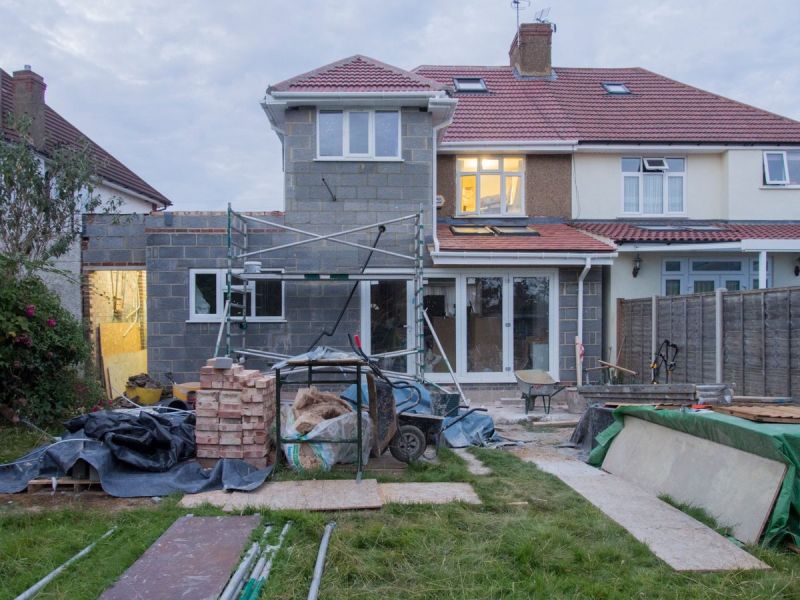
The bulk of flat roofs in Swindon sit over single-storey rear extensions, integral and detached garages, bay window tops, and dormers. A large share were built during the extension surge of the 1980s to early 2000s across estates like Freshbrook, Toothill, Haydon Wick, and Abbey Meads, and most of those started life in built-up felt with a 15-20 year design life. Do the maths and a felt roof laid in 1995 is now around 30 years old - comfortably beyond its span, which is why the call-out rate is so high. If your flat roof is leaking and you want an honest steer on whether it needs a repair or a re-cover rather than a sales pitch, Roof Repairs Swindon can assess the deck condition and tell you straight.
Newer flat roofs, laid from the mid-2000s onward, are more often EPDM rubber or GRP fibreglass, which last far longer - around 25-30 years for GRP and up to 40-50 for quality EPDM. These fail differently and less often, usually at joints and details rather than across the whole field.
What Actually Fails on a Flat Roof
Nearly every flat roof leak traces back to one of four faults. Knowing them turns a mystery damp patch into a short list, which is half the battle when you're deciding whether it's a quick fix or a bigger job.
Splits, blisters, and seam failures
The covering itself is the most obvious suspect. Felt and EPDM membranes develop splits where movement in the structure below stresses the material, or along seams that weren't fully bonded when laid. Blisters form when trapped moisture or air balloons under the surface and eventually cracks open. On GRP, hairline cracks appear where the deck flexes or the fibreglass was laid in cold, damp conditions. All three are usually repairable while small - a split gets patched, a blister is cut, dried, and resealed - but each lets water track under the membrane, where it can spread well beyond the visible fault before it shows up as a ceiling stain.
Ponding and failed falls
A flat roof isn't truly flat - it's built with a slight slope, the falls, of at least 1:40 to push water toward an outlet. When water sits for more than about 48 hours after rain, that's ponding, and it means either the falls were never built steep enough or the deck has sagged into a low spot. Ponding matters because standing water wears a covering faster than rain that runs off, particularly on felt, so it quietly shortens the life of the whole roof.
Flashings, upstands, and outlets
The junctions are where a lot of leaks start. Where a flat roof meets a wall, a chimney, or the edge of the roof, flashing or an upstand seals the gap, and these details fatigue and lift over time. Blocked outlets are the single most preventable fault - autumn leaf-fall clogs a gutter or drain, water backs up, and it finds its way under the covering's edges. Clearing outlets twice a year, more often under overhanging trees, is one of the cheapest ways to avoid a much larger bill.
How to Diagnose Where the Leak Is Coming From
The trickiest thing about a flat roof leak is that the damp patch on your ceiling is rarely under the actual fault. Water enters at one point, tracks along the deck or a joist, and drips somewhere else entirely, sometimes a metre or more away.
The practical approach is to start at the low points and the details rather than the middle of the roof. Check the outlets first, then the flashings and upstands, then any visible splits or blisters, and only then the open field of the covering. On a felt roof, tired laps and the base of upstands are the usual entry points; on EPDM, seams and pipe collars; on GRP, cracks at changes of angle. A roofer will often wet-test a suspect area or lift a section to trace the path, which is why a proper diagnosis visit typically costs £60-£150 and is money well spent before committing to any repair. Guessing wrong and patching the damp patch rather than the entry point is the most common reason a "fixed" flat roof leaks again within weeks.
Repair Methods and What They Cost
Once the fault is found, the repair itself is usually quick and, on a sound roof, inexpensive. Costs vary mostly with access and how far the water has already travelled.
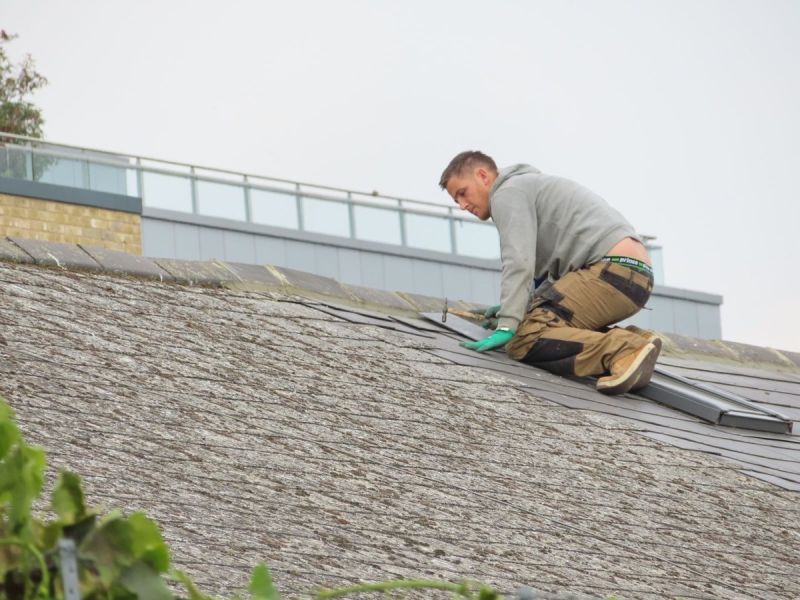
Minor repairs - patching a small split, cutting and resealing a blister, re-dressing a lifted flashing, or clearing and adjusting a blocked outlet - typically cost £150-£400 in Swindon, with the spread driven by whether it's a ground-floor garage you can reach off a ladder or a first-floor dormer needing a tower or scaffold. More involved repairs, where water has got under the membrane over a wider area or several faults need sorting in one visit, tend to run £500-£1,200. A localised re-cover of a failed section, rather than the whole roof, sits around £80-£120 per square metre depending on material.
The hidden cost is the deck
The figure that changes everything is whether the timber deck below the membrane is still sound. If only the surface has failed, the repair is cheap and quick. If water has been getting in for months or years and the deck has gone soft, you're also paying to cut out and replace boards at roughly £15-£30 per square metre, plus any rotten joists. This is exactly why the cheapest flat roof repair is the one caught before water ever reaches the timber - the moment it does, a £250 patch can become a £900 job.
Repair or Replace: Where the Line Sits
Patching buys time, but there's a point where it stops being economical, and knowing where that line falls saves you throwing good money after bad. The decision comes down to age, the number of faults, and the state of the deck rather than any single leak.
The rough rule roofers use is that once repair costs approach a third of replacement cost, or the roof has failed more than twice in two years, replacement is the better spend. A flat roof with one isolated split near the end of an otherwise healthy life is almost always worth repairing. A roof showing multiple faults at once - recurring leaks in different spots, widespread blistering, a deck that feels soft underfoot - is a different conversation, and another patch just delays the inevitable. The same age-and-condition logic we set out in our guide to roof repair versus replacement in Swindon applies just as well to flat roofs as to pitched ones.
If you have crossed into replacement territory, the material choice becomes the main question. We've broken down the numbers in full in our guide to flat roof replacement costs in Swindon comparing EPDM, GRP, and felt, which is the natural next read once repairs stop stacking up.
How Swindon's Weather and Housing Age Affect Flat Roofs
Local conditions aren't a footnote here - Wiltshire's climate and the town's building history are the reason flat roofs fail the way they do, and factoring them in helps you plan repairs at the right time.

Swindon sees around 110-120 rain days a year, and the swing from frosty winter nights to warm summer days makes flat roofs expand and contract constantly. That movement is what opens splits and lifts seams on rigid or aged coverings, and it's why exposed estates catch wind-driven rain that finds a tired felt lap fast. The wet season also matters for timing: GRP in particular needs a dry, mild deck to cure, so repairs and re-covers in that material are best booked for spring or late summer rather than a damp December.
The age profile does the rest. With so much of Swindon's flat roofing being 1980s-90s felt now past its design life, the town is in a wave of roofs failing at roughly the same time. If yours is felt and over 20 years old, treat any leak as a prompt to get the deck assessed rather than assuming a patch will hold for another decade.
Choosing Someone to Do the Repair
A flat roof repair is a small job, but a bad one leaks again within a season, so the person matters as much as the price. Swindon sits on the M4 corridor with a healthy supply of roofing trades serving Wiltshire, which means you can afford to be choosy.
Get two or three itemised quotes rather than one, and be wary of anyone who offers to seal the whole roof in a bucket-of-goo coating without first tracing the actual leak - that's a symptom-hider, not a repair. Look for membership of a recognised trade body such as the National Federation of Roofing Contractors' find-a-contractor register, public liability cover of at least £2 million, and a written note of exactly what's being repaired and what guarantee comes with it. You can also confirm a firm's standing on the government-backed TrustMark register of approved tradespeople before you let anyone up a ladder. A good repair on a sound flat roof should come with a workmanship guarantee of at least 1-2 years, and roughly 1 in 4 repeat leaks come down to a rushed diagnosis rather than a bad patch, so paying a little for a proper leak trace is rarely wasted.
---
FAQ
Q: How much does a flat roof repair cost in Swindon?
A: Minor repairs - patching a split, resealing a blister, re-dressing a flashing, or clearing a blocked outlet - typically cost £150-£400, with access driving the spread between a low garage and a first-floor dormer. More involved repairs covering a wider area, or several faults in one visit, run £500-£1,200. A localised re-cover of a failed section sits around £80-£120 per square metre, and replacing rotten timber deck adds roughly £15-£30 per square metre on top.
Q: How do I find where a flat roof is leaking?
A: The damp patch on your ceiling is rarely under the actual fault, because water tracks along the deck before it drips. Start at the low points and the details - outlets first, then flashings and upstands, then visible splits or blisters, and only then the open covering. On felt, tired laps and upstand bases are common entry points; on EPDM it's seams and pipe collars; on GRP it's cracks at changes of angle. A professional leak trace or wet-test typically costs £60-£150 and saves patching the wrong spot.
Q: When should a flat roof be replaced rather than repaired?
A: When repair costs approach about a third of replacement cost, the roof has failed more than twice in two years, or it shows multiple faults at once - recurring leaks in different places, widespread blistering, or a deck that feels soft underfoot. A single isolated split on an otherwise healthy roof is worth repairing; a tired felt roof over 20 years old with several faults is usually better re-covered than patched again.
Q: Why do flat roofs in Swindon fail so often?
A: Two reasons. First, a large share were laid in cheap felt during the 1980s-90s extension boom and are now 30-plus years old, well beyond their 15-20 year design life. Second, Wiltshire's 110-120 rain days a year and the swing from frosty winters to warm summers make coverings expand, contract, and split, while exposed estates catch wind-driven rain that finds tired laps quickly. Together they put flat roofs at the centre of local roofing call-outs.
---
Ready to work with Roof Repairs Swindon?
Let's connect! We’re here to help.
Send us a message and we’ll be in touch.
Or give us a call today at 01793 939231
Agency Contact Form
More Marketing Tips, Tricks & Tools