Roof Valleys in Swindon: Why They Leak First and What Repairs Cost in 2026
If a roof has a valley, that is almost certainly where it will leak first. A valley is the internal angle where two roof slopes meet, and it carries the combined rainwater run-off from both of them into a single narrow channel. On a typical Swindon semi with a rear projection, the valley handles roughly 40 - 50% of the entire roof's water, down a channel maybe 300mm wide. Everything about that is demanding: more volume, faster flow, more debris, more freeze-thaw, and more thermal movement than anywhere else on the roof. Industry figures consistently put valleys and flashings together at around 30 - 40% of all pitched roof leaks, well ahead of slipped tiles. Swindon's housing stock makes this especially relevant - the town's enormous stock of interwar and post-war semis with rear extensions, plus the 1980s and 1990s estates at Freshbrook, Toothill and Shaw, are almost all valley-heavy designs. Here is what goes wrong, and what each fix costs.
How a Valley Fails, and Why You Find Out Late
Valleys do not fail suddenly. They fail slowly, and the building absorbs the water for a long time before anything shows on a ceiling.
The usual sequence starts with debris. Leaves, moss, roofing grit and the occasional tennis ball collect in the channel, because a valley is a natural trap. That debris holds water against the valley lining instead of letting it run. On lead, standing water accelerates corrosion from the underside. On mortar-filled valleys it saturates the mortar. On fibreglass it works into any hairline crack. Over a few seasons the lining develops a pinhole or a split, and water starts going underneath rather than over.
What happens next is why valleys are expensive. The water now runs onto the timber valley board, the tile battens, and the underfelt, all of which are enclosed and unventilated. Rot progresses for two or three years with no visible symptom because the ceiling below is protected by the underfelt, until the felt perishes too. By the time a stain appears on a bedroom ceiling, you are usually not looking at a lining repair, you are looking at a strip-back with timber replacement.
That is the case for having someone look at valleys specifically rather than waiting for a symptom. A visual check from a ladder or a drone costs very little and catches this at the stage where it is a £400 job rather than a £1,400 one - Roof Repairs Swindon will normally fold a valley inspection into a general roof check rather than charging separately for it.
The Warning Signs From Ground Level
Look up the line of the valley with binoculars. A lead valley that has gone white and chalky along the centre line is corroding. Visible rippling or buckling means thermal movement has exceeded what the lead sheet lengths allow. Vegetation growing in the valley is proof it is holding water and silt. Tiles along the valley edge that look uneven or have slipped inward suggest the timber beneath has moved. And inside, in the loft, look at the underside of the valley board with a torch - dark staining, white salt deposits or soft timber are all late-stage signs.
Lead Valleys: The Traditional Option and Its One Weakness
Lead is what most older Swindon valleys are made of, and there is a good reason it has been used for centuries. It is malleable enough to dress into an awkward junction, it does not corrode in the way steel does, and a properly installed lead valley lasts 50 years or more.

The weakness is thermal movement. Lead expands and contracts substantially with temperature - over the range a Swindon roof sees between a February night and a July afternoon, a long sheet will move several millimetres. If the sheet lengths are too long, that movement concentrates stress at the fixings and the lead splits, always at the same points. The Lead Sheet Training Academy standard limits individual valley sheet lengths to a maximum of 1.5 metres, with lapped joints between. A very high proportion of failed lead valleys in Swindon fail because someone ran a single continuous length of lead down a 4-metre valley to save time on laps.
The second issue is lead code - the thickness. Valleys should be Code 5 lead as a minimum, which is around 2.24mm thick. Code 4, at 1.8mm, is frequently used because it is cheaper and easier to work, and it fails early in a high-flow application like a valley.
Costs in Swindon: replacing a single lead valley on a typical semi, roughly 3 - 4 metres, runs £450 - £900 including stripping back and re-bedding the adjoining tiles. If the valley board and battens need replacing too, add £200 - £450. A full two-storey valley on a larger detached property can reach £1,200 - £1,800.
Fibreglass, Dry Valley Systems and the Modern Alternatives
GRP fibreglass valleys have become common on newer Swindon housing and on replacement work. They are formed as preformed troughs, laid in sections, and bonded. They cost less than lead, around £350 - £700 for the same 3 - 4 metre run, and they are not worth stealing, which matters more than it should.
The trade-offs are real. GRP has a shorter expected life than well-installed lead, typically 25 - 35 years, and it becomes brittle with UV exposure over time. It is also unforgiving of bad installation - the joints between sections are the failure point, and a joint laid without sufficient overlap or with a contaminated bonding surface will leak within a few years.
Dry valley systems, which use a preformed GRP or plastic trough with an integral upstand and no mortar at all, are increasingly the default on new work. They cost £400 - £800 installed, they ventilate rather than trap moisture, and they eliminate the mortar failure mode entirely. On a Swindon property where the valley is being redone anyway, a dry valley is usually the sensible specification.
The Mortar-Filled Valley: Avoid
Some older Swindon properties, particularly certain 1930s builds, have valleys where the gap between the tiles is simply packed with sand and cement rather than lined. Mortar has no flexibility, cracks within a few years of thermal cycling, and once cracked it holds water rather than shedding it. If you have one, it is not a repair candidate - it should be stripped and replaced with a proper lined valley. Repointing it is money spent on postponing the same job.
Swindon's Weather and Why Valleys Suffer Here
Swindon's climate does something specific to valleys, and it is not just the rainfall total.
The town sits at around 650 - 700mm of annual rainfall, which is on the drier side for England. That figure makes Swindon sound gentle on roofs, and for tiles it broadly is. Valleys are a different case, because what damages a valley is not total rainfall, it is intensity and freeze-thaw cycling.
Swindon is inland, at roughly 100 - 150 metres elevation on the edge of the Marlborough Downs, and it gets a genuine continental-style temperature swing compared with coastal towns. Air frosts number around 45 - 55 a year, meaningfully more than Bristol or Bath, let alone the south coast. Every one of those frosts is a freeze-thaw cycle acting on any water sitting in a valley, and water sits in valleys far more readily than on open slopes. Ice forming in a hairline crack in a mortar valley or under a lead lap expands by roughly 9% and levers the fault wider. Repeat that fifty times a winter for a decade and small faults become large ones.
Summer works in the opposite direction. Swindon's inland position gives hotter summer roof surface temperatures than the coast - a south-facing dark tiled roof can exceed 60°C on a July afternoon - and that maximises the thermal movement that splits over-long lead sheets.
There is also a debris factor specific to the older parts of town. The mature tree cover through Old Town, Lawn and the streets around Queen's Park drops heavily into valleys each autumn, and a valley under a mature tree needs clearing annually rather than every few years.
Where Ventilation Comes In
A valley that has stayed wet also creates a condensation risk in the roof space below, and the two problems compound. Any valley repair worth paying for includes checking that the roof void is ventilating properly, because replacing rotten timber in an unventilated void just means replacing it again. We covered how this works in our guide to lead flashing repairs in Swindon and what commonly fails, which deals with the same materials in the abutment context.
Getting a Valley Repair Quoted Properly
Valley work is one of the easier places for a quote to be misleading, because the amount of hidden timber damage is genuinely unknown until the tiles come off.
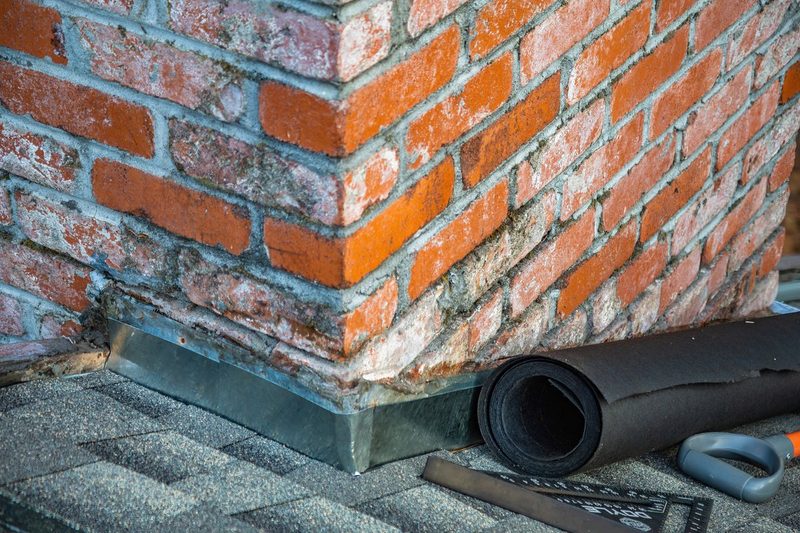
A good quote handles this honestly. It prices the lining replacement, it states the assumed condition of the valley board and battens, and it gives a clear rate for additional timber if more is found - typically £25 - £45 per metre of batten and £60 - £120 per square metre of valley board. A quote that gives a single flat figure with no allowance for what is underneath is either padded or is going to become a conversation on the day.
Three things worth asking. What lead code is being used, if lead - Code 5 minimum. What sheet lengths, if lead - 1.5 metres maximum with proper laps. And what is happening to the underfelt at the valley, because a new lining laid over perished felt is a half-finished job.
Access matters too. Most single-storey valley work can be done from a scaffold tower or a roof ladder, but a two-storey valley on a Swindon townhouse usually needs a scaffold, which adds £400 - £900. That is often the largest line on the quote and it is worth asking whether the scaffold can serve any other outstanding work at the same time. The National Federation of Roofing Contractors publishes standards on contractor competence, and the HSE's guidance on roof work covers what safe access should look like - a contractor proposing to do a two-storey valley off a ladder is cutting a corner you should not accept.
Frequently Asked Questions
How do I know if my roof valley is leaking? Often you will not, until late. Check the loft with a torch and look at the underside of the valley board for dark staining, white salt deposits or soft timber. From the ground with binoculars, look for a chalky white line along a lead valley, rippling or buckling, vegetation growing in the channel, or tiles along the valley edge sitting unevenly. A ceiling stain usually means the problem has been running for two or three years.
How much does it cost to replace a roof valley in Swindon? A lead valley replacement on a typical 3 - 4 metre semi run is £450 - £900, or £1,200 - £1,800 for a full two-storey valley on a larger detached property. GRP fibreglass is £350 - £700 for the same run, and a dry valley system £400 - £800. Add £200 - £450 if the valley board and battens need replacing, and £400 - £900 for scaffold on two-storey work.
Is lead or fibreglass better for a roof valley? Properly installed lead lasts longer - 50 years or more against 25 - 35 for GRP - but it must be Code 5 minimum and laid in sheet lengths no longer than 1.5 metres with proper laps. Most failed lead valleys failed because someone ran one continuous length. GRP costs less, is not worth stealing, and is unforgiving of poor jointing. For a roof being redone anyway, a dry valley system is usually the best specification because it ventilates rather than trapping moisture.
Why do valleys leak more than the rest of the roof? Because they carry the combined run-off from two slopes down a channel roughly 300mm wide - typically 40 - 50% of the whole roof's water on a semi with a rear projection. That means higher flow rate, more debris collecting, more standing water, and more freeze-thaw damage than anywhere else. Valleys and flashings together account for roughly 30 - 40% of all pitched roof leaks.
My valley is filled with mortar. Can it be repointed? It can, but it is not worth it. Mortar has no flexibility, cracks with thermal cycling within a few years, and once cracked it holds water instead of shedding it. Repointing postpones the same job rather than fixing it. A mortar-filled valley should be stripped out and replaced with a proper lined valley - lead, GRP or a dry valley system.
Ready to work with Roof Repairs Swindon?
Let's connect! We’re here to help.
Send us a message and we’ll be in touch.
Or give us a call today at 01793 939231
Agency Contact Form
More Marketing Tips, Tricks & Tools