Storm Damage Roof Repairs in Swindon: What to Do and What Insurance Covers
Named storms now reach the UK most winters, and Swindon's position on the open Wiltshire downs means the town takes wind that has crossed 20 miles of unbroken farmland. Gusts above 55 mph occur several times most winters here, and 70 mph is not unheard of in a serious named storm. Insurers typically use 55 mph as the threshold at which damage counts as storm damage - and that threshold is where most declined claims begin. Roughly half of storm-related roof claims in the UK are reduced or refused, and the overwhelming reason is not fraud but pre-existing condition. What you do in the first 24 hours makes the difference between a claim that pays and one that does not. Here is the sequence.
The First 24 Hours: What to Do, in Order
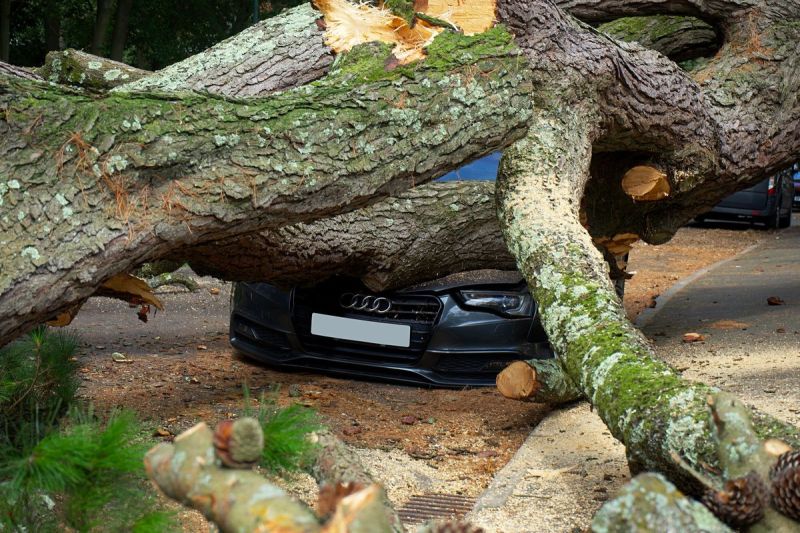
Safety first, and this is not a formality. Do not go into the loft if the ceiling is bulging, do not go outside directly beneath a damaged roof, and do not go up a ladder in wind. Tiles come down without warning and a dislodged ridge tile falling three storeys is lethal.
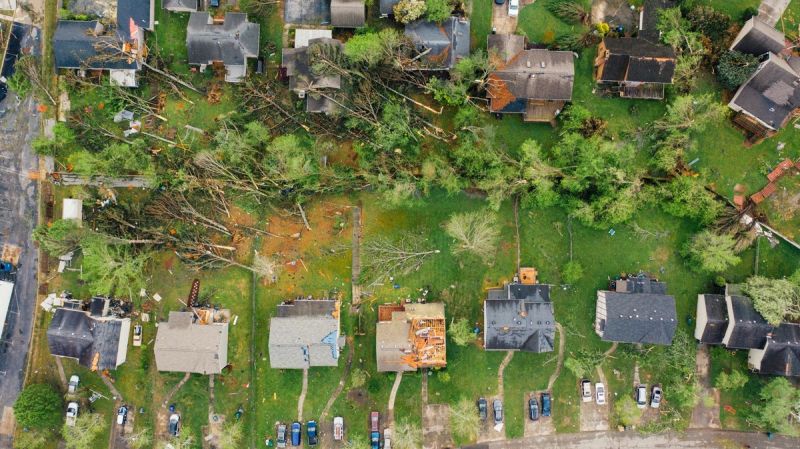
Then, in this order. Photograph everything from ground level, from several angles, including wide shots that show the whole property and close shots of the damage. Photograph the inside too - water stains, ceiling damage, wet insulation. Timestamps matter, so use a phone rather than a camera with the date unset.
Contain the water inside. Buckets under drips, and if a ceiling is bulging with trapped water, pierce it deliberately in one place with a screwdriver over a bucket. A controlled release is far better than a whole ceiling coming down.
Call your insurer's claims line before commissioning any permanent work. Most policies require notification before repairs beyond making safe. Then arrange a temporary make-safe, which every policy allows and nearly all will reimburse.
Only then get quotes for the permanent repair. Roof Repairs Swindon provides emergency make-safe across the town and the surrounding villages and can supply the written cause report that insurers ask for.
What Emergency Work Costs in Swindon
Emergency make-safe is priced on call-out and materials rather than as a normal repair.
A tarpaulin or shrink-wrap cover over a damaged area, fitted same day, runs £180 to £450 depending on the size and the access. An out-of-hours or weekend call-out adds £80 to £200. Temporary internal propping of a sagging ceiling is £150 to £350.
Once made safe, the permanent repairs are priced normally: replacing slipped or lost tiles £180 to £320, refixing or rebedding a ridge £550 to £1,100, renewing chimney flashing £460 to £940, re-tiling one elevation £2,800 to £5,400.
The make-safe cost is money well spent regardless of the claim outcome. Two days of rain through an open roof routinely causes £3,000 to £15,000 of internal damage to ceilings, plaster, flooring and contents, and insurers can reduce a settlement if you failed to mitigate the loss.
Keep the Make-Safe Invoice Separate
Ask the roofer to invoice the emergency work separately from any permanent repair. Insurers usually pay make-safe costs even when they are still investigating or querying the main claim, and separating the two speeds the payment up considerably.
What Insurance Covers, and What It Does Not
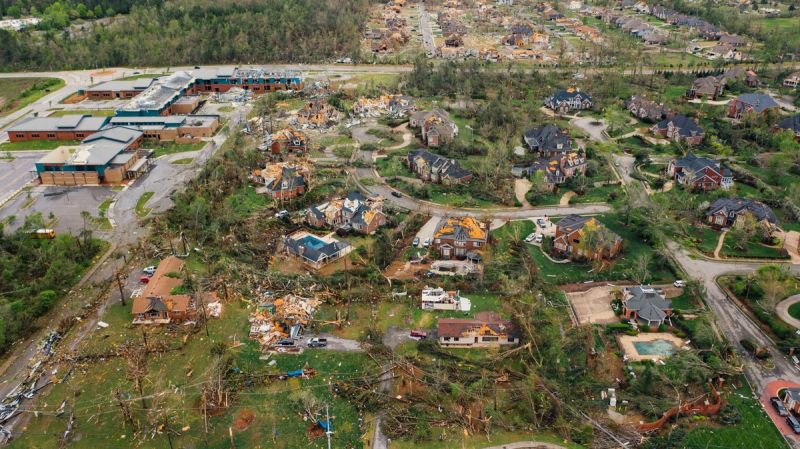
Buildings insurance covers storm damage: sudden, unforeseen damage caused by an identifiable weather event. Most policies define a storm by wind speed, commonly 55 mph, sometimes with alternatives for exceptional rainfall, hail or snow loading.
It does not cover wear and tear, gradual deterioration, poor original workmanship, or lack of maintenance. That is not insurers being difficult - it is the fundamental distinction between insurance and a maintenance budget.
The awkward zone is where the two overlap, and it is where most Swindon claims fail. A ridge tile that blew off in a 60 mph gust looks like storm damage. If the loss adjuster finds the mortar bedding was visibly perished and had been for years, the insurer's position is that the storm merely completed a failure already in progress, and the claim gets declined or reduced.
Three other common exclusions worth knowing. Damage to fences, gates and outbuildings is often excluded or subject to a separate lower limit. Damage caused by a tree falling is usually covered but the removal of the tree may not be. And "escape of water" and "storm" are separate perils with different excesses, so water entering through a storm-damaged roof is normally a storm claim, not an escape of water one.
Why Swindon's Exposure Matters to Your Claim
Swindon sits on the northern edge of the Marlborough Downs with open country to the west and south-west. Prevailing winds arrive with a long uninterrupted run, and the newer estates at Wichelstowe, Tadpole Garden Village and Priory Vale are particularly exposed because they sit on higher, open ground with limited mature tree shelter.
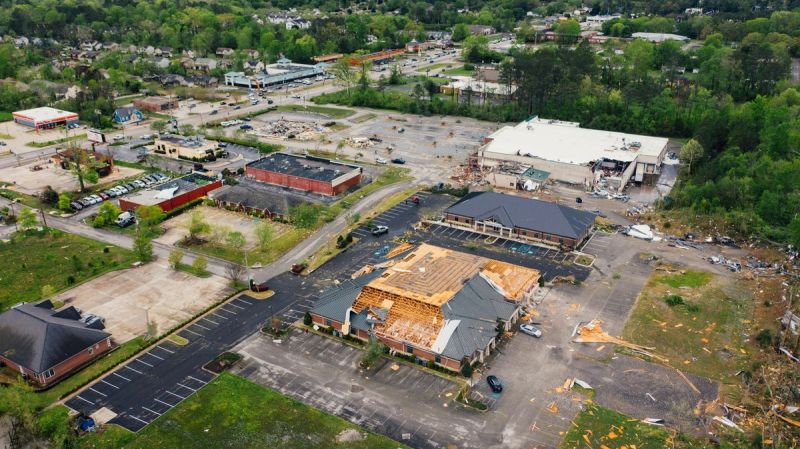
The practical effect: the town regularly records gusts in the 50 to 60 mph band, which straddles the typical insurance threshold. A claim can turn on whether the recorded gust at the nearest weather station hit 55 mph or 52.
This is worth knowing because you can check. Met Office observations are publicly available, and Met Office climate and observation data can support a claim where an insurer disputes that a storm occurred. Naming the storm in your claim and citing the date and the nearest station's recorded gust makes the claim considerably harder to wave away.
The other Swindon-specific factor is mortar bedding. In this exposure, mortar ridge and verge details typically last 20 to 30 years rather than the 30 to 40 they might manage in a sheltered position. A large share of the town's 1970s and 80s estate housing is now at exactly the age where the mortar is perished, which is why so many local storm claims run into the pre-existing condition argument.
Documentation That Turns a Declined Claim Into a Paid One
Three documents carry disproportionate weight.
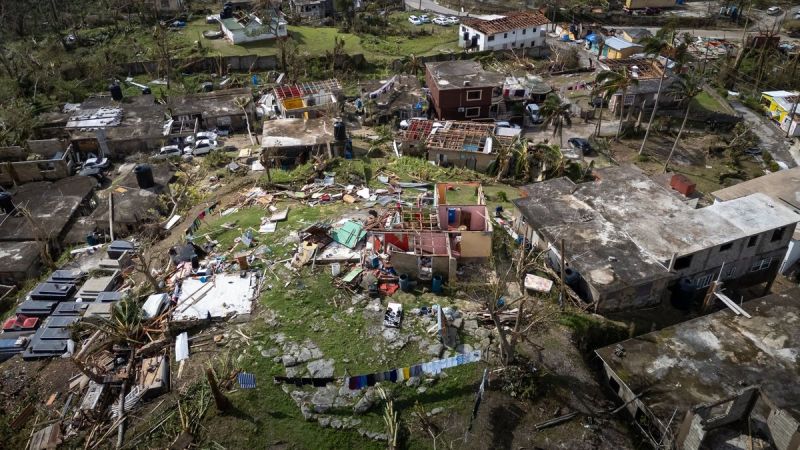
A dated pre-storm inspection report. If you had the roof surveyed within the last couple of years and it was found sound, the pre-existing condition argument collapses. A roof survey costs £180 to £400 in Swindon and is the cheapest claim insurance available.
A written cause report from a roofer after the event, stating what failed, why, and that the failure is consistent with wind loading at the recorded speeds. This is different from a quote, and a good roofer will provide one for £80 to £200 or include it with the make-safe.
Photographs from before and after. Most people have neither. If you have any exterior photos of your house from the last few years, even holiday snaps with the roof in the background, keep them.
If the Claim Is Declined
You are entitled to ask for the decision in writing with the reasoning. If you disagree, the insurer's internal complaints process must be exhausted first, after which the Financial Ombudsman Service will consider the case free of charge. Ombudsman decisions frequently go the policyholder's way where the insurer has relied on a general assertion of wear and tear without specific evidence.
Preventing the Next One: What Actually Reduces Risk
Storm damage is not random. It concentrates on details that were already weak, and three interventions cover most of it.
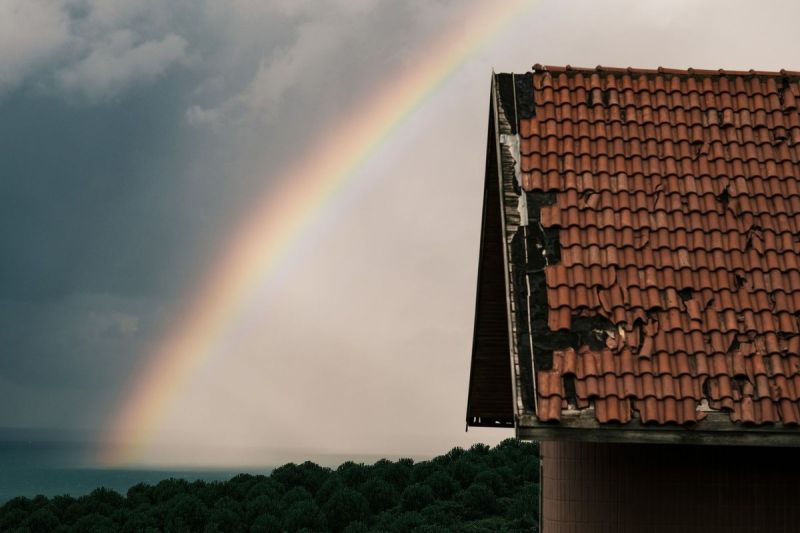
Replace mortar ridge and verge with dry fix. A dry ridge kit costs £45 to £70 per linear metre fitted against £30 to £50 for repointing, and it is mechanically fixed rather than relying on mortar that has no tensile strength. On a 10 metre ridge that is roughly £200 to £250 extra for a detail that carries a 10 to 15 year manufacturer warranty.
Check tile clipping. BS 5534 requires mechanical fixing calculated for the site's wind exposure zone, and Swindon's open position sits higher than many. A lot of older estate roofs were laid to earlier standards with far fewer clips.
Clear gutters and cut back overhanging branches annually. Gutter clearing runs £80 to £180 for a semi, and it prevents both the water backing up under the eaves and the branch that takes out a row of tiles in the next storm.
We go into the ridge and verge options in more detail in our guide to roof repairs in Marlborough, which covers the same exposed downland conditions.
Choosing a Roofer After a Storm
Storms bring door-knockers to Swindon within hours. Some are legitimate firms working the area; others are not, and the pattern is consistent enough to be worth naming: an unsolicited caller, a claim to have spotted damage from the road, pressure to decide immediately, cash up front, and no written quote.
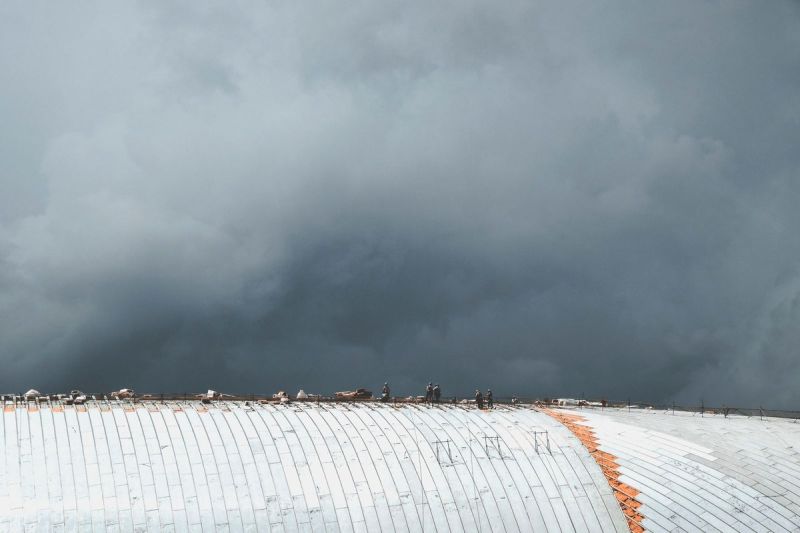
Do not agree to anything on the doorstep, and do not pay a deposit to someone who arrived uninvited. Legitimate roofers are busy after a storm and will not need to pressure you.
Check public liability of at least £2 million and ask for the certificate. Ask about membership of a body such as the National Federation of Roofing Contractors, whose members are vetted and audited. Get the quote in writing with a scope of work, and if the work involves replacing more than 25% of a roof surface, confirm that Swindon Borough Council building control will be notified.
Frequently Asked Questions
What should I do first after storm damage to my roof in Swindon?
Stay out from under the damaged area and off ladders in wind. Photograph the damage from ground level inside and out with timestamps, contain water indoors, then call your insurer's claims line before commissioning permanent work. Arrange a temporary make-safe, which costs £180 to £450 and is nearly always reimbursed.
Will my insurance cover storm damage to my roof?
Usually, if wind speeds exceeded the policy threshold, commonly 55 mph, and the damage was sudden rather than gradual. The most common reason claims are declined is pre-existing condition, such as perished ridge mortar. A dated roof survey from before the storm is the single best defence against that argument.
How much does an emergency roof cover cost in Swindon?
A tarpaulin or shrink-wrap cover fitted same day runs £180 to £450 depending on size and access, with £80 to £200 more for an out-of-hours call-out. Ask for it to be invoiced separately from any permanent repair, since insurers typically pay make-safe costs even while investigating the main claim.
What can I do if my storm damage claim is refused?
Ask for the decision and its reasoning in writing, then use the insurer's internal complaints process. If that does not resolve it, the Financial Ombudsman Service will consider the case free of charge. A written cause report from a roofer, plus Met Office wind data for the date, materially strengthens a challenge.
Ready to work with Roof Repairs Swindon?
Let's connect! We’re here to help.
Send us a message and we’ll be in touch.
Or give us a call today at 01793 939231
Agency Contact Form
More Marketing Tips, Tricks & Tools