Roof Repairs in Faringdon and Shrivenham: Common Problems, Costs and Who to Call
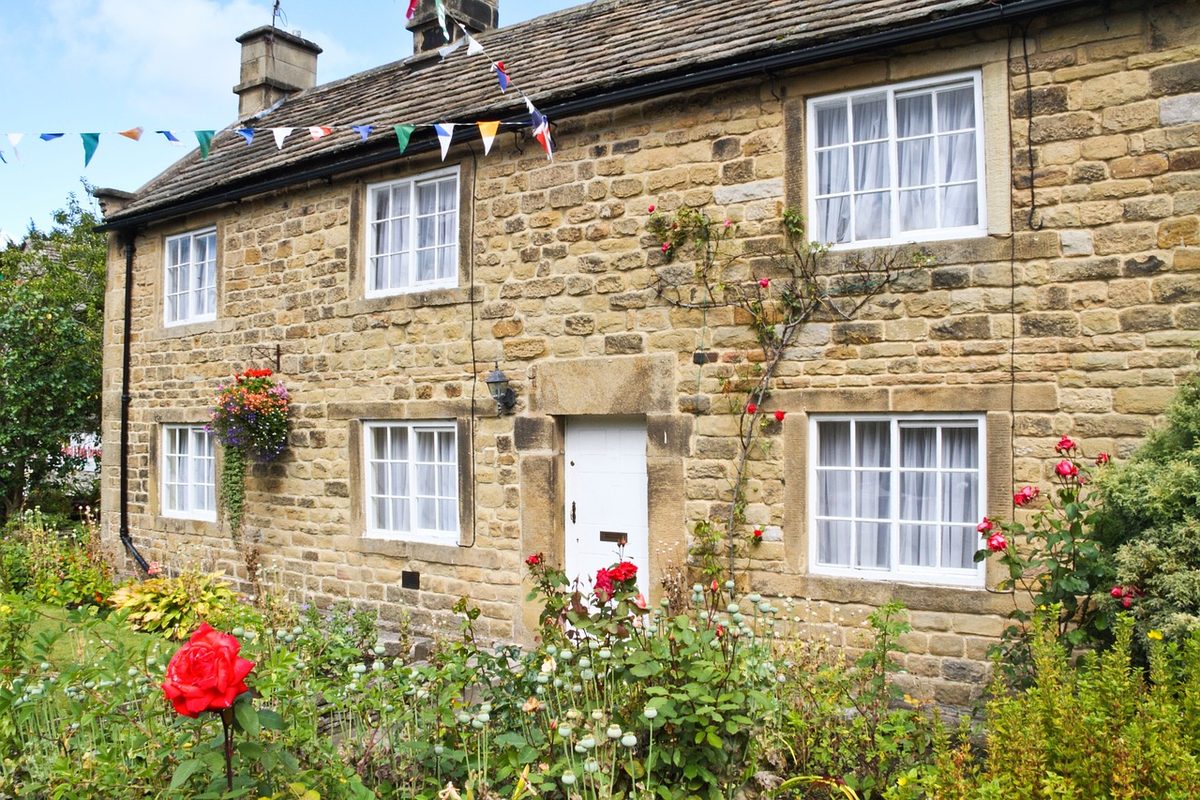
Faringdon and Shrivenham sit on the Oxfordshire side of the Vale of White Horse, roughly 12 and 8 miles east of Swindon, and their roofs are a genuinely different proposition from the town's. Faringdon's centre is a designated conservation area with Cotswold stone slate and clay tile on buildings that in some cases predate 1700. Shrivenham mixes similar historic stone stock around the High Street with post-war and 1970s development around the Defence Academy. Both sit under the northern edge of the Berkshire Downs, catching wind funnelled along the Vale, with rainfall around 700 to 780 mm a year. Repairs across the two run £190 to £1,600 depending on the material as much as the fault - and material is where the price differences here really come from.
What Roof Repairs Cost in Faringdon and Shrivenham in 2026
Costs split by covering material more than by job type, so it is worth separating them.
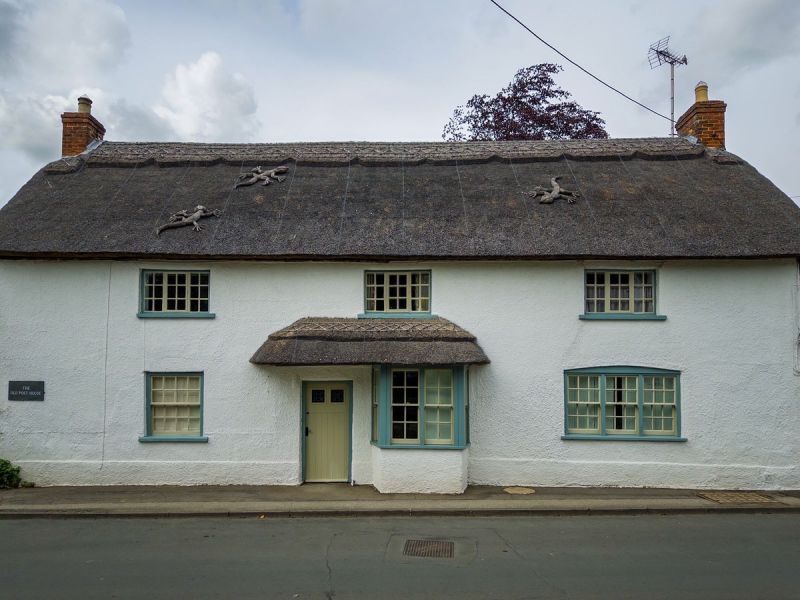
On concrete or clay tile roofs, which covers most of the post-war stock: replacing slipped tiles is £180 to £320, refixing a ridge tile £160 to £290, repointing a ridge line £550 to £1,100, and renewing chimney flashing £460 to £940. Re-tiling one elevation of a semi runs £2,800 to £5,400, and a full re-roof £7,200 to £12,500.
On Cotswold stone slate, everything roughly doubles. Replacing a handful of slipped stone slates is £380 to £750 because each one has to be sourced, sized and hung on an oak peg or a nail through a hole that has to be drilled. Re-slating a single elevation runs £8,000 to £18,000, and a full stone slate re-roof on a modest cottage £22,000 to £48,000.
That gap surprises people, and it is the most important thing to understand before getting quotes here. Roof Repairs Swindon covers both villages and will identify the covering and the constraints before pricing, because a stone slate quote priced as a tile job is a quote that will change.
Cotswold Stone Slate: What It Is and Why It Costs So Much
Cotswold stone slate is not slate at all. It is a fissile limestone, split along its bedding planes into thin sheets, quarried historically from a handful of local sources. It is graded by size and laid in diminishing courses, largest at the eaves, smallest at the ridge.
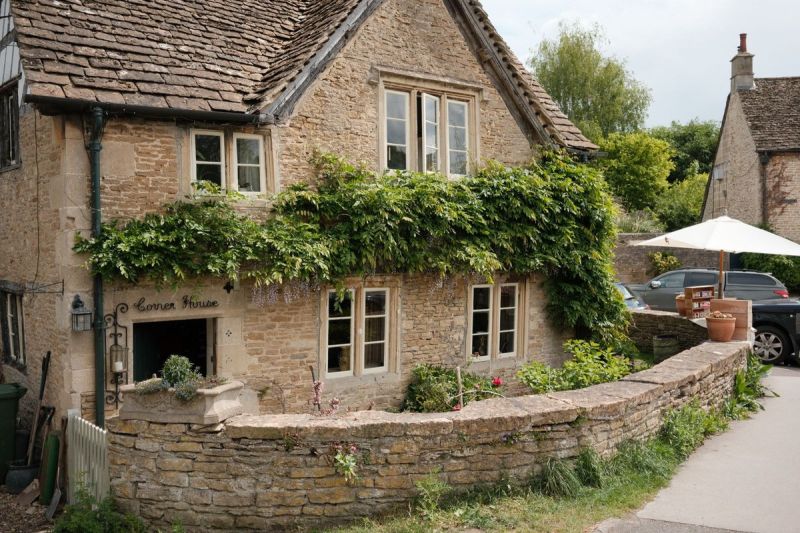
Three things make it expensive. The material: new Cotswold stone slate costs £120 to £280 per square metre against £18 to £45 for concrete tile. Reclaimed is often preferred for matching and runs £90 to £220 per square metre with variable quality. The labour: a stone slate roof takes roughly three times the man-hours of a tiled one, because every slate is sized, sorted and individually fixed. And the weight: at 80 to 130 kg per square metre against 45 to 55 for concrete tile, the roof structure has to be checked and often strengthened.
The failure mode is delamination. Water penetrates along the bedding planes, freezes, and splits the slate into thinner layers. It happens at the exposed tail first. A roof can lose 5% to 10% of its slates to delamination over a couple of hard winters, which is why patching goes on for decades before a full re-slate becomes unavoidable.
Oak Pegs and Torching
Older stone slate roofs were hung on riven oak pegs over sawn laths, with lime mortar torching underneath as the secondary weatherproofing. Oak pegs last remarkably well but eventually rot at the head. Torching crumbles, falls into the roof space, and stops doing its job.
Neither can be repaired in place. Once the pegs and torching are failing across a slope, the only proper answer is stripping, sorting the sound slates, re-battening with a breathable membrane, and re-hanging. That is why a stone slate roof tends to go from "fine with occasional repairs" to "needs a complete strip" fairly suddenly.
Faringdon's Conservation Area and What It Requires
Faringdon town centre is a conservation area and contains a substantial number of listed buildings, particularly around the Market Place, London Street and Coxwell Street.
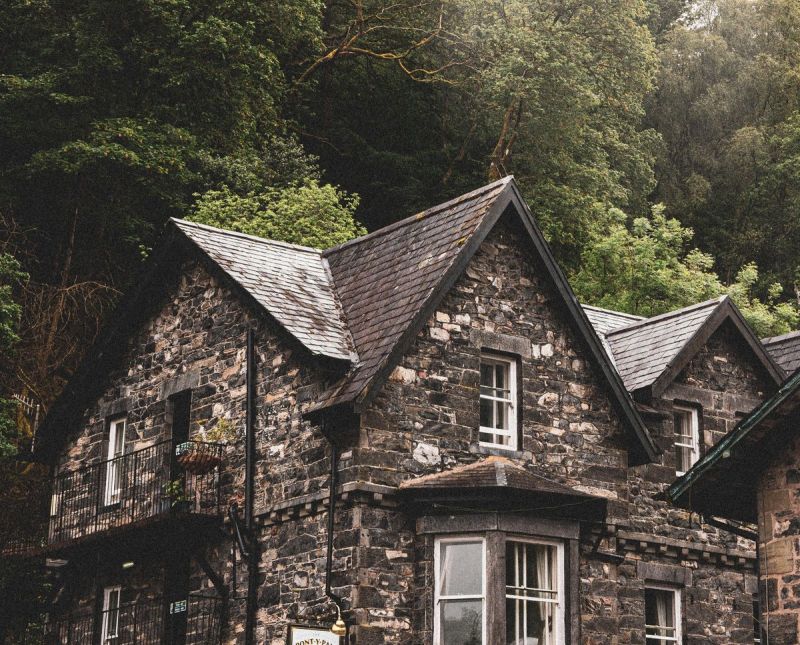
Inside a conservation area, like-for-like repair using matching material generally needs no consent. Changing the covering, altering the roof shape, or adding rooflights to a street-facing elevation usually does. On a listed building the protection extends to the whole structure including roof timbers and coverings, and any work affecting its character needs listed building consent - which is a criminal offence to skip, not merely a planning breach.
The practical consequences for a homeowner: substituting artificial stone slate or concrete for Cotswold stone will normally be refused on a listed building and often on a conservation area property visible from the street. Reclaimed matching material is the expected answer, and sourcing it takes time. Budget 6 to 12 weeks lead time on reclaimed Cotswold slate for a substantial job, and plan the work around it rather than expecting a start date.
The Vale of White Horse District Council conservation team offers pre-application advice, and a conversation before you commission drawings saves both money and weeks. General guidance on what needs consent is set out on the Planning Portal.
Shrivenham: Mixed Stock and the Exposure Question
Shrivenham divides between the historic core along the High Street and Station Road, and the post-war and 1970s-80s housing that grew around the Defence Academy and Watchfield.
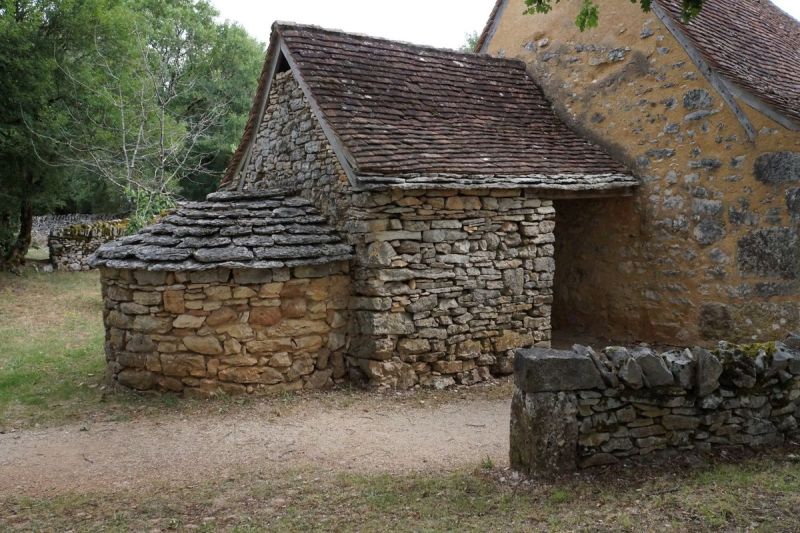
The newer stock is standard concrete interlocking tile on trussed rafters, and the faults are the familiar ones: mortar ridge and verge cracking at 25 to 35 years, embrittled bitumen underlay tearing at the eaves after three or four decades, and inadequate ventilation causing condensation once loft insulation is upgraded to modern depth. Fitting an eaves protection tray costs £280 to £650 per elevation, and retrofitting soffit and ridge ventilation £450 to £1,100.
Exposure is the local variable. Shrivenham sits at the foot of the downs with open agricultural land to the north and west, and the wind run across the Vale is substantial. Winter gusts above 50 mph are routine. That shortens the life of mortar bedding and makes proper tile clipping to BS 5534 more important than it would be in a sheltered position.
Dry fix systems make sense here for the same reason. A dry ridge kit at £45 to £70 per linear metre against £30 to £50 for mortar repointing is a modest premium for a mechanically fixed, ventilated detail carrying a 10 to 15 year manufacturer warranty.
Moss, Damp Winters and the Cleaning Question
Rainfall in this part of Oxfordshire runs 700 to 780 mm a year, and the winters are damp rather than extreme. Combined with the north-facing slopes and the tree cover around both villages, that gives ideal conditions for moss.
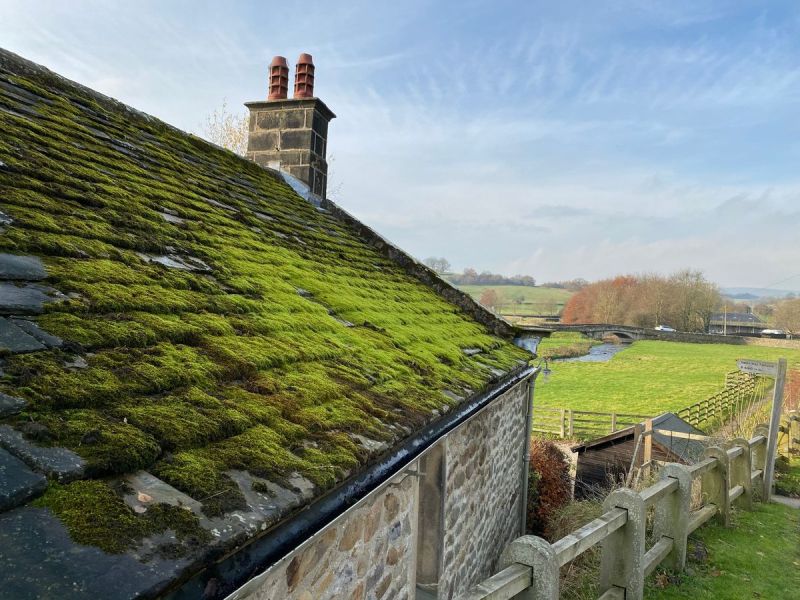
On a concrete tile roof, moss holds water against the surface, blocks tile laps and washes into gutters. Scraping and treating a semi costs £350 to £750. On a stone slate roof, moss and lichen are part of the character and removing them aggressively does real harm - stone slate is porous and a pressure washer will strip the weathered surface and drive water into the bedding planes, accelerating delamination.
The rule is simple: never pressure wash a stone slate roof, and never pressure wash a concrete tile roof either, because it strips the surface coating. Scraping by hand and applying a biocide is slower and it is the correct method for both. We set out the methods and what to avoid in more detail in our guide to roof cleaning costs in Swindon.
Gutters need clearing annually in both villages given the tree cover, at £80 to £180 for a semi. Blocked gutters causing water to back up under the eaves course is the most common preventable cause of damp at the top of an upstairs wall.
When Repair Stops Making Sense
The threshold is different for stone and tile, and this is where good advice saves real money.
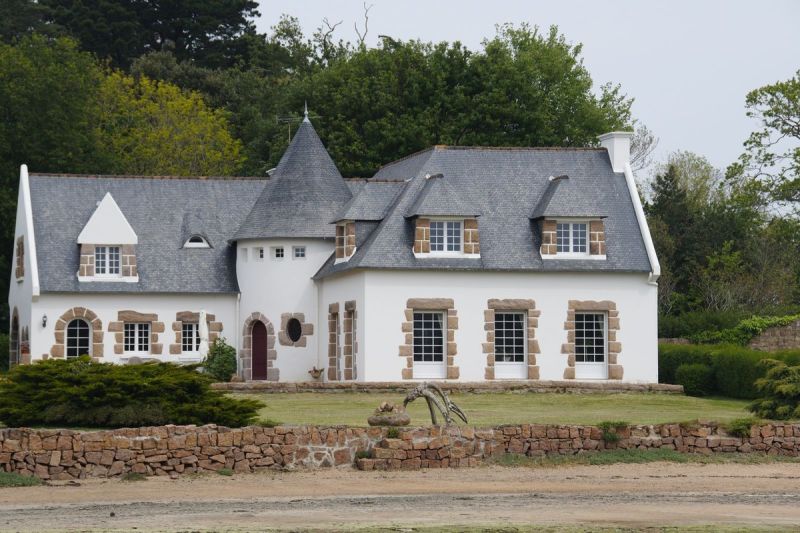
On a tiled roof, the rule of thumb holds: once you are replacing more than about 15% of a slope each year, or once faults appear in different places rather than the same spot, re-tiling that elevation costs less over five years than continued patching plus repeated scaffold hires.
On a stone slate roof, the calculation is different because re-slating is so expensive. Patching a Cotswold roof for another decade at £400 to £800 a year is entirely rational when the alternative is £25,000. The trigger for a full strip is not the number of slates being replaced but the condition of what is underneath: failing pegs, collapsed torching, and rotten laths. If the loft shows daylight through the slate joints and debris on the floor, the roof is telling you it needs stripping.
Get a survey rather than guessing. A roof survey in this area runs £200 to £450 and must include the roof space, since that is where the pegs, laths and torching are assessed. On a listed building, a survey by someone with conservation experience is worth paying more for.
Choosing a Contractor for Heritage and Standard Work
For standard tiled roofs, the usual checks apply: public liability of at least £2 million with the certificate produced, membership of a body such as the National Federation of Roofing Contractors, and two recent local references you actually call.

For stone slate and listed work, add a specific test. Ask which Cotswold stone slate roofs the contractor has worked on in the last two years and where. Ask whether they size and sort slates on site into diminishing courses. Ask what they use for fixings and whether they work with oak pegs. A roofer who is competent on concrete tile but has never handled stone slate will do visible damage to a historic roof without meaning to.
We cover similar material-matching issues on the older stock to the north in our guide to roof repairs in Purton and Cricklade.
Frequently Asked Questions
How much does a roof repair cost in Faringdon or Shrivenham?
On concrete or clay tile, replacing slipped tiles runs £180 to £320 and repointing a ridge line £550 to £1,100. On Cotswold stone slate everything roughly doubles: replacing a few slipped slates is £380 to £750. A full tile re-roof runs £7,200 to £12,500, while a full stone slate re-roof on a modest cottage is £22,000 to £48,000.
Why is Cotswold stone slate so expensive to repair?
Three reasons. New stone slate costs £120 to £280 per square metre against £18 to £45 for concrete tile. It takes roughly three times the labour, since every slate is sized, sorted and individually hung. And at 80 to 130 kg per square metre it is heavy enough that the roof structure often needs checking or strengthening.
Do I need permission for roof work in Faringdon's conservation area?
Like-for-like repair using matching material generally needs no consent. Changing the covering material, altering the roof shape, or adding rooflights to a street-facing elevation usually does. On a listed building any work affecting its character needs listed building consent, and carrying it out without consent is a criminal offence rather than a planning breach.
Can I pressure wash moss off a Cotswold stone roof?
No. Stone slate is porous, and a pressure washer strips the weathered surface and drives water into the bedding planes, which accelerates delamination. Hand scraping followed by a biocide is the correct method. The same applies to concrete tiles, where pressure washing removes the pigmented surface coating.
Ready to work with Roof Repairs Swindon?
Let's connect! We’re here to help.
Send us a message and we’ll be in touch.
Or give us a call today at 01793 939231
Agency Contact Form
More Marketing Tips, Tricks & Tools