Squirrels, Birds and Wasps in Swindon Roofs: The Damage They Do and What Proofing Costs
Something is moving about above your bedroom ceiling at six in the morning. In Swindon that's most often a grey squirrel, and the reason is straightforward: the town has grown outwards into mature woodland and hedgerow for seventy years, from the post-war expansion estates through Freshbrook and Toothill to Abbey Meads and, more recently, Wichelstowe and Tadpole Garden Village. Grey squirrels number an estimated 2.7 million in the UK and thrive in exactly that mix of gardens, mature trees and housing. Birds and wasps follow the same pattern. Between them they cause a surprising amount of roof damage, some of it expensive, and the law restricts what you can do about several of them. Here's the practical picture.
Squirrels: The Expensive One
A grey squirrel gets into a roof through a gap of about 45mm, which is smaller than most people expect and roughly the size of a missing bit of mortar under a verge or a lifted felt corner at the eaves.
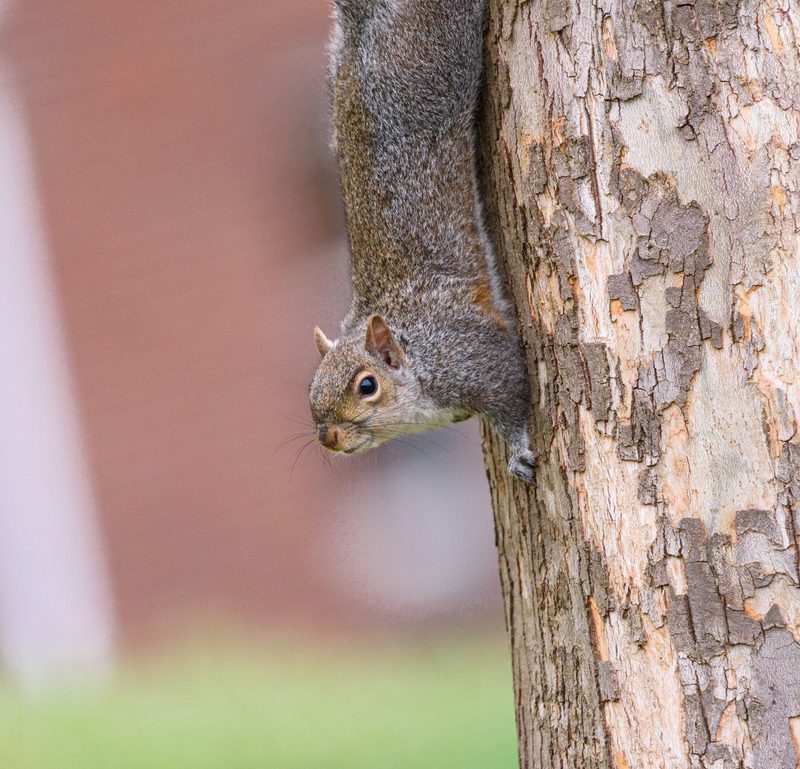
Once in, the damage is not passive. Squirrels' incisors grow continuously, around 15cm a year, so they gnaw constantly to wear them down. In a loft that means roofing battens, joists, water tank pipework, stored belongings and, most seriously, electrical cable insulation. Insurers and fire investigators have long flagged rodent-gnawed cabling as a cause of domestic fires, and a squirrel that strips the sheathing off a lighting circuit in an unboarded loft has created a hazard nobody can see.
They also displace insulation, compacting it into nesting chambers, and they will enlarge their entry hole, which is how a hairline gap at the felt becomes a fist-sized hole that then lets water in.
Costs in Swindon this year: proofing the roofline after removal runs £350 to £900 for a typical semi, depending on how much soffit and verge needs attention. Replacing gnawed cable and making the loft electrically safe is £200 to £600 through an electrician. Replacing displaced or contaminated insulation, £300 to £700. A full eaves and verge overhaul on a house that's had repeated incursions, £1,200 to £2,400.
Grey squirrels are a non-native invasive species and it is illegal to release one back into the wild once caught, which shapes how control has to be done. If the scratching is overhead now, the sequence is removal first and then proofing, and a roofer can check the roofline for the actual entry point once the loft is clear, because sealing the wrong gap simply traps the animal inside.
How They're Getting In
On Swindon's housing stock there are four usual routes.
Rotten or shrunken timber soffits and fascias on 1950s to 1970s properties, where a gap has opened at the wall junction. Missing or degraded mortar at the verge on the gable end, particularly on older mortar-bedded verges that predate dry verge systems. Gaps where a felt underlay has perished and pulled back from the eaves, common on anything roofed before about 1990. And the junction where an extension or conservatory roof meets the main wall, which is often the weakest detail on the whole house.
New-build estates aren't exempt, though the failure mode differs. On Wichelstowe and Tadpole Garden Village properties the issue tends to be a gap around a soil vent pipe or a badly seated eaves comb rather than decay, so it's a snagging problem rather than an age problem.
Birds in the Roof and Chimney
Birds do less structural damage than squirrels but come with more legal complication, and the chimney problems they cause are genuinely expensive.
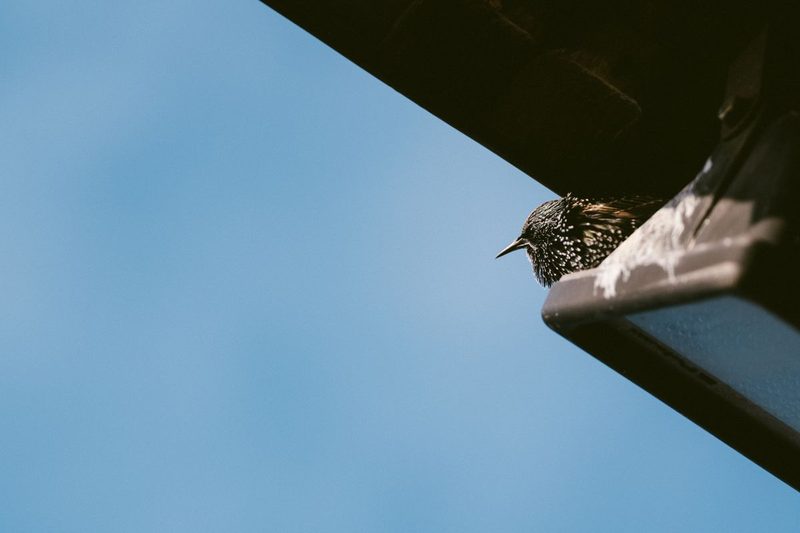
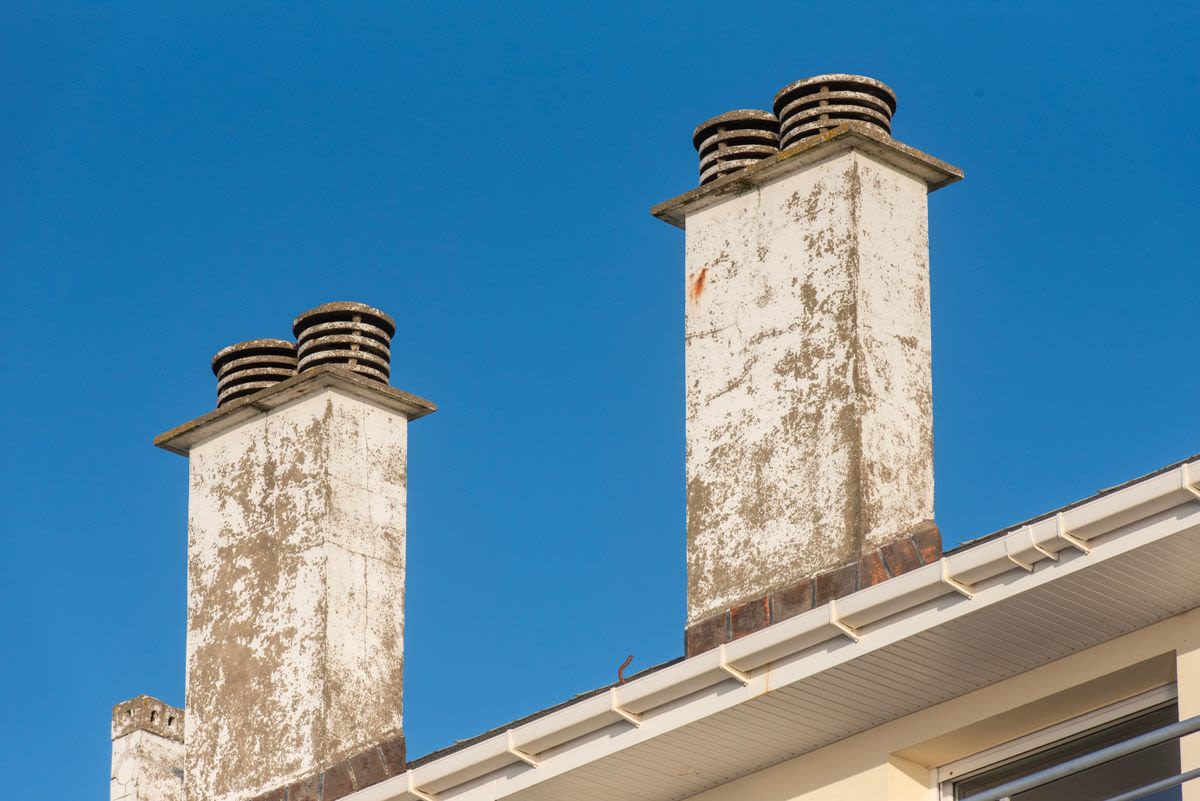
Jackdaws are the main offender in Swindon's older housing, and they are persistent. A pair will drop sticks down an open flue until enough lodge to form a platform, and a single jackdaw nest can contain a startling volume of material. That blocks the flue completely. On a house with a live gas fire or an open fire, a blocked flue is a carbon monoxide risk rather than an inconvenience, and it's the reason chimney sweeping before autumn matters more than people think.
Starlings and house sparrows nest under eaves and in soffit gaps. Both are red-listed species in the UK, with sparrow numbers down substantially since the 1970s, which matters for how you deal with them. Feral pigeons roost on flat roofs and behind chimney stacks, and pigeon guano is acidic enough to degrade lead flashing and mortar over time, as well as blocking gutters and hoppers.
Typical costs: chimney sweep and nest removal, £90 to £220. Fitting a bird guard or cowl to a pot, £80 to £180 per pot plus access. Eaves combs and soffit proofing on a terrace or semi, £250 to £600. Bird spikes or netting to a flat roof or parapet, £200 to £900 depending on area and access.
What the Law Actually Says
All wild birds, their active nests and their eggs are protected under the Wildlife and Countryside Act 1981. Removing or blocking an active nest, one in use or being built, is an offence.
The practical consequence is timing. UK nesting season runs roughly March to August, with jackdaws and sparrows sometimes starting in February. Proofing work has to happen outside that window, or after a nest is confirmed empty and the young have fledged. A roofer who offers to net your eaves in May with birds going in and out is offering to commit an offence on your behalf.
There are general licences permitting control of certain species in specific circumstances, but they are narrow, conditional and not a blanket permission. Natural England's guidance on wild bird licences sets out what's covered. For almost every domestic roof job the sensible answer is simply to wait until September and proof it properly then.
Bats are a separate and stricter matter again, with full protection for the animals and their roosts year-round, and any roof work on a property with bats needs a survey first.
Wasps and Bees Under the Eaves
A wasp nest in a roof void is the most common of the three and the least damaging structurally, but it's the one that stops work.
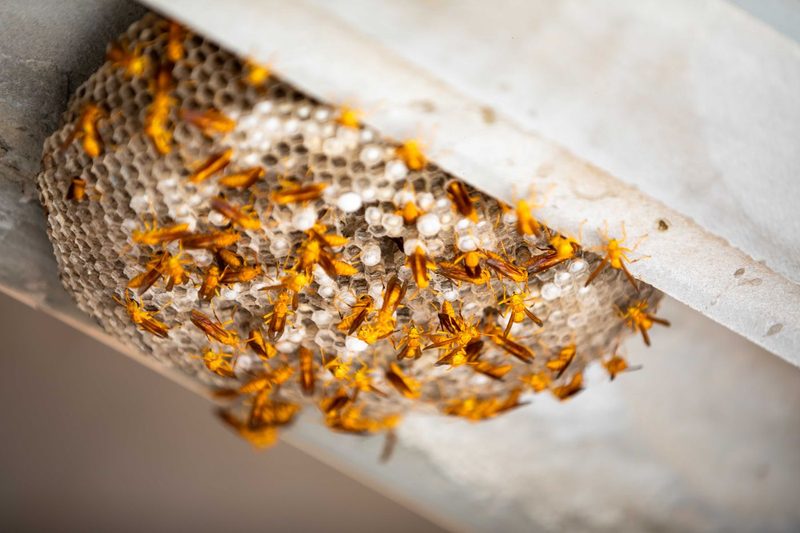
Wasps build in lofts, under eaves, behind soffits and in wall cavities, usually entering through the same gaps squirrels use. A mature nest by late summer can hold 5,000 to 10,000 workers. The nest material itself is paper-thin and harmless, and a nest is abandoned every autumn and never reused, so the structural concern is minimal.
Where it matters is access. No roofer will work near an active nest, and nor should they, so a wasp nest in August can delay a roof job by a week while it's treated. Treatment costs £55 to £110 typically, and is usually same-day.
The important distinction is bees. Honey bee colonies in a roof void are a different situation entirely, and they should not be treated as pests. A colony can build combs weighing several kilos, and if it's killed in situ the honey ferments, seeps through the ceiling and attracts secondary infestation, which turns a £70 problem into a ceiling replacement. Local beekeeping associations will often remove a swarm free. Bumblebees nest in small numbers, die off naturally by late summer, and are best left alone.
If there's a wasp nest near where work needs to happen, deal with it first and then bring the roofer. Doing it in the other order wastes a visit.
What This Costs You Indirectly
The direct removal costs above are modest. The expensive consequences are the ones that follow from a roof left open for a season.
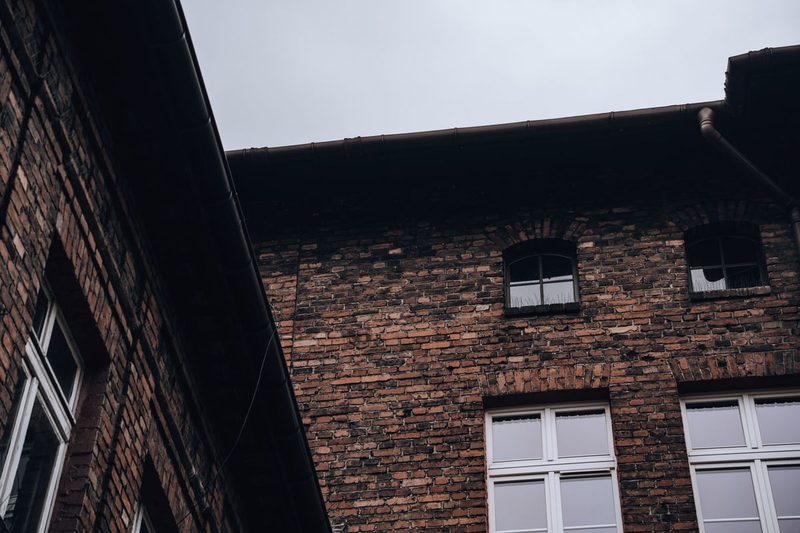
An enlarged squirrel hole at the eaves admits driven rain, and Swindon gets around 730mm a year with the wettest months running October to January. Water entering at eaves level saturates the wall plate, the joist ends and the top of the cavity, and wall plate replacement is invasive work at £800 to £2,500 depending on the run.
Displaced loft insulation is the quiet cost. A loft insulated to 270mm that's been dragged into nesting chambers over two winters can easily be down to 100mm effective depth across a third of its area, and that shows up as a higher heating bill rather than as a visible problem.
Blocked gutters from nest material and guano cause overflow down the wall face, which in Swindon's mix of rendered post-war and cavity-brick housing produces damp patches attributed to everything except the gutter. And condensation gets worse, because nesting material blocks eaves ventilation paths, which is a cause of the loft damp we cover in our guide to loft condensation and roof ventilation in Swindon.
Insurance rarely helps. Most buildings policies exclude damage caused by vermin, insects and birds as a maintenance matter, so this is money you spend rather than claim.
Proofing a Swindon Roof Properly
Proofing means closing every gap larger than about 20mm around the entire roofline, and doing it with materials that last rather than with expanding foam.
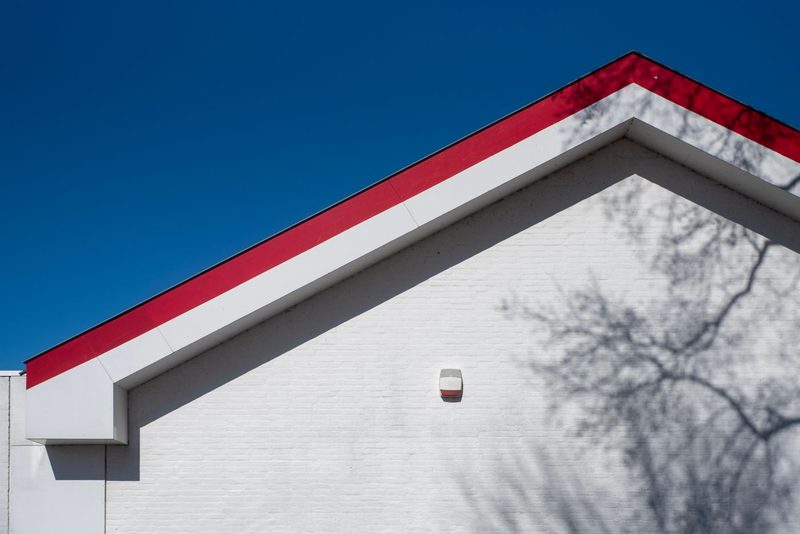
The measures that work: replacing rotten timber soffits and fascias with uPVC, which costs £45 to £75 per metre fitted and solves the most common entry route permanently. Fitting eaves combs, the corrugated filler that closes the gap under the first course of tiles, at £4 to £9 per metre. Converting a mortar-bedded verge to a dry verge system, £35 to £60 per metre, which removes the gable-end gap and stops the recurring mortar problem at the same time. Chimney cowls and bird guards on unused pots. Stainless mesh over any ventilation opening, rather than plastic, which squirrels chew through in a week.
Two things to avoid. Expanding foam is not proofing, it's decoration; squirrels remove it in minutes and it traps moisture against timber. And blocking the only entry hole while the animal is still inside produces a trapped squirrel that will chew its way out through something more expensive, usually a ceiling.
Timing helps too. September to February is the window that avoids nesting season and precedes the worst of the winter weather. Trimming back tree branches so nothing overhangs within about two metres of the roof removes the motorway, and on Swindon's older estates with mature street trees that's often the single most effective thing you can do. RSPB guidance on deterring squirrels is worth a look for the garden side of it.
Frequently Asked Questions
How do I know if I have squirrels or rats in my Swindon loft?
Squirrels are active in daylight, particularly at dawn and dusk, and make heavier scampering and loud gnawing. Rats are largely nocturnal, quieter and more scurrying, and usually come up from below rather than in at the eaves. Squirrel droppings are larger and rounder than rat droppings.
Can I remove a bird's nest from my roof?
Not while it is active. All wild birds, their eggs and nests in use are protected under the Wildlife and Countryside Act 1981, so removal or blocking during the March to August nesting season is an offence. Wait until the nest is confirmed empty, then proof the gap.
What does it cost to squirrel-proof a roof in Swindon?
Typically £350 to £900 for a standard semi, covering soffit and fascia repairs, eaves combs and sealing the entry points. A full eaves and verge overhaul on a repeatedly affected house runs £1,200 to £2,400.
Does home insurance cover squirrel damage to a roof?
Usually not. Most buildings policies exclude damage caused by vermin, birds and insects on the basis that it is a maintenance issue. Check your own policy wording, but assume the cost sits with you and act early while it is still small.
```json { "@context": "https://schema.org", "@type": "FAQPage", "mainEntity": [ { "@type": "Question", "name": "How do I know if I have squirrels or rats in my Swindon loft?", "acceptedAnswer": { "@type": "Answer", "text": "Squirrels are active in daylight, particularly at dawn and dusk, and make heavier scampering and loud gnawing. Rats are largely nocturnal, quieter and more scurrying, and usually come up from below rather than in at the eaves. Squirrel droppings are larger and rounder than rat droppings." } }, { "@type": "Question", "name": "Can I remove a bird's nest from my roof?", "acceptedAnswer": { "@type": "Answer", "text": "Not while it is active. All wild birds, their eggs and nests in use are protected under the Wildlife and Countryside Act 1981, so removal or blocking during the March to August nesting season is an offence. Wait until the nest is confirmed empty, then proof the gap." } }, { "@type": "Question", "name": "What does it cost to squirrel-proof a roof in Swindon?", "acceptedAnswer": { "@type": "Answer", "text": "Typically £350 to £900 for a standard semi, covering soffit and fascia repairs, eaves combs and sealing the entry points. A full eaves and verge overhaul on a repeatedly affected house runs £1,200 to £2,400." } }, { "@type": "Question", "name": "Does home insurance cover squirrel damage to a roof?", "acceptedAnswer": { "@type": "Answer", "text": "Usually not. Most buildings policies exclude damage caused by vermin, birds and insects on the basis that it is a maintenance issue. Check your own policy wording, but assume the cost sits with you and act early while it is still small." } } ] } ```
```json { "@context": "https://schema.org", "@type": "Article", "headline": "Squirrels, Birds and Wasps in Swindon Roofs: The Damage They Do and What Proofing Costs", "description": "Scratching in the loft, jackdaws in the chimney, a wasp nest under the eaves. Here's what each one does to a Swindon roof, which species you're legally not allowed to touch, and what it costs to get them out and keep them out in 2026.", "author": { "@type": "Organization", "name": "The Team" }, "datePublished": "2026-09-18", "dateModified": "2026-09-18", "articleSection": "Roof Repairs" } ```
Ready to work with Roof Repairs Swindon?
Let's connect! We’re here to help.
Send us a message and we’ll be in touch.
Or give us a call today at 01793 939231
Agency Contact Form
More Marketing Tips, Tricks & Tools